How to choose aluminum fittings for strength, corrosion and fit

a[data-rs-seo-link]{text-decoration:underline!important;color:#1a56db!important;cursor:pointer!important;}a[data-rs-seo-link]{text-decoration:underline!important;color:#1a56db!important;cursor:pointer!important;}
What makes aluminum fittings useful in metal assemblies
Aluminum fittings are used when a connection needs to be light, corrosion resistant, workable and visually clean without the weight penalty of many steel alternatives. The decision is not simply aluminum versus steel. It is a specification choice involving alloy, temper, manufacturing route, finish, load path, thread design, galvanic corrosion risk and the service environment. For buyers, designers and maintenance teams, the practical goal is to match the fitting to the job rather than assume one aluminum grade or finish can cover every application.
In metal hardware, the term aluminum fittings can refer to many parts: tube connectors, elbows, tees, couplings, brackets, corner joints, threaded adapters, profile connectors, hose fittings and custom machined or extruded components. For related hardware categories and material discussions, see the Metal Fittings section.
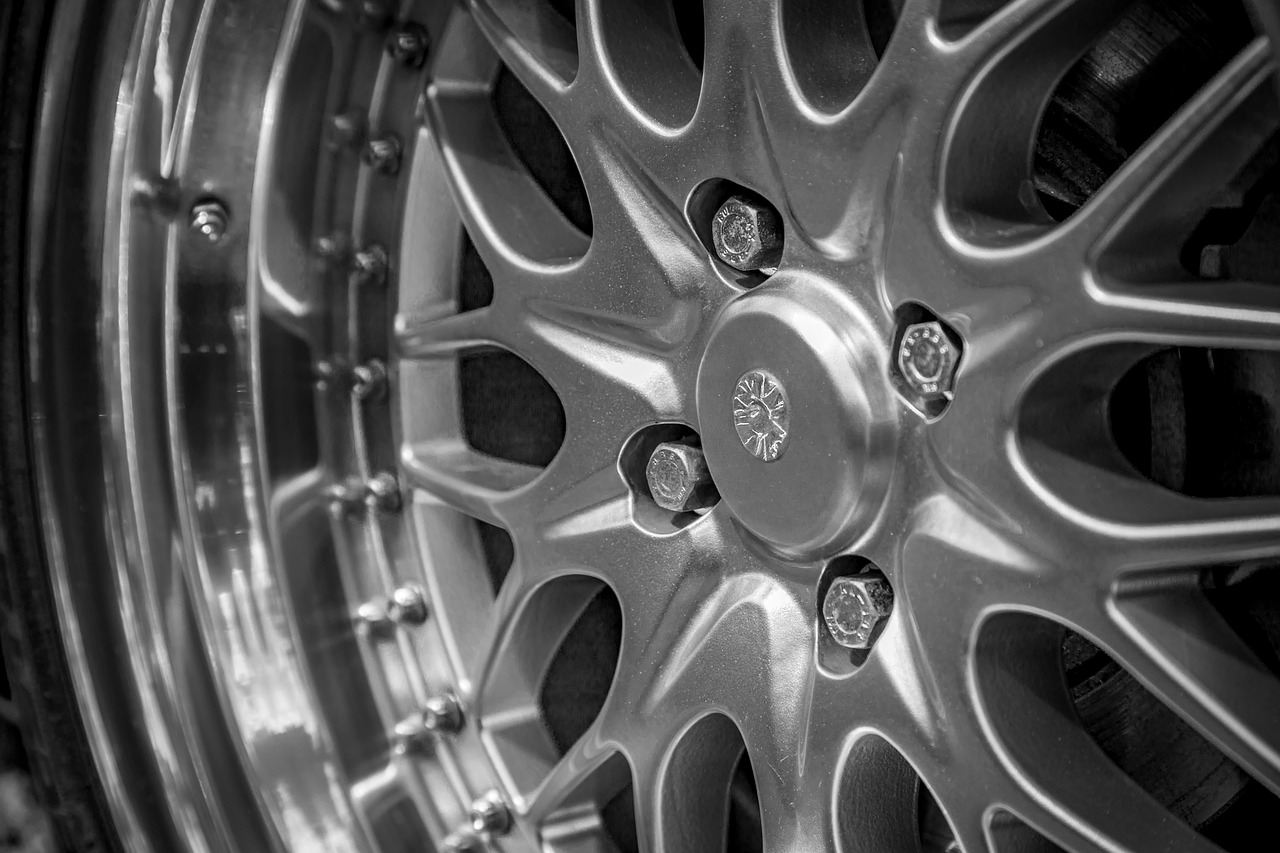
Aluminum’s main appeal is its strength-to-weight potential, natural oxide film, good machinability and compatibility with extrusion, casting, forging and CNC machining. Its limitations also need to be considered. Compared with steel, aluminum has lower stiffness, can be more sensitive to threaded and impact loads, and may face galvanic corrosion when connected to more noble metals in wet or salty environments.
Key alloy and temper choices
The alloy and temper determine much of a fitting’s real-world behavior. A part described only as aluminum is underspecified for most mechanical or outdoor applications. The Aluminum Association’s wrought alloy designation system and standards such as ANSI H35.1 are widely used references for alloy and temper naming, while ISO 209:2024 specifies chemical composition limits for wrought aluminum and aluminum alloys.
| Common alloy family | Typical fitting relevance | Practical selection note |
|---|---|---|
| 6xxx series, such as 6061 and 6063 | Extruded profiles, brackets, tube fittings, machined connectors | Often selected for a balance of strength, corrosion resistance, weldability and extrudability. |
| 5xxx series, such as 5052 or 5083 | Sheet-formed fittings, marine-adjacent hardware, brackets | Useful where corrosion resistance is a priority, but not heat-treatable like 6xxx alloys. |
| Cast aluminum alloys | Complex elbows, housings, clamps and custom shapes | Good for shape complexity, but casting quality, porosity control and pressure requirements must be checked. |
| High-strength 2xxx or 7xxx alloys | Specialized aerospace or performance components | Strength can be high, but corrosion behavior, cost and joining requirements need close review. |
Temper is just as important as alloy. A 6061-T6 fitting does not behave like annealed 6061, and a 6063 architectural profile may be chosen more for extrudability and surface finish than for maximum mechanical strength. When a fitting will carry structural load, clamp force or repeated vibration, the purchase specification should include both alloy and temper, not only dimensions.
For extruded aluminum bars, rods, profiles and tubes, ASTM B221 is a common reference point in specification work. The key point for design teams is that product form matters. Extruded, cast, forged and machined fittings can all be aluminum, but they are produced under different assumptions for mechanical properties, tolerances and inspection.
Strength, stiffness and load path
Many aluminum fittings are strong enough for their intended use, but aluminum should not be selected by copying the geometry of a steel part without analysis. Aluminum has a lower elastic modulus than steel, so an aluminum component can deflect more under the same load if the geometry is unchanged. In practice, this may call for thicker walls, broader flanges, larger radii or reinforced bosses around threaded areas.
Load direction also matters. A fitting that performs well in compression may not tolerate bending, thread pull-out, impact or fatigue in the same way. Tube connectors, corner brackets and profile fittings often fail not because the base metal is weak, but because the geometry concentrates stress around holes, sharp inside corners, thin walls or thread roots.
Questions to ask before choosing a load-bearing fitting
- Will the fitting carry static load, impact load, vibration or repeated cycling?
- Is the main stress tension, compression, shear, bending or torsion?
- Are there stress concentrators such as sharp corners, counterbores or thin threaded bosses?
- Will fastener preload crush, distort or gall the aluminum surface?
- Does the fitting need proof-load testing, pressure testing or documented traceability?
For non-structural hardware, these questions may be simple. For lifting, safety, pressure containment, vehicle, marine or building applications, they become critical. Aluminum fittings can be excellent engineering choices, but they should be treated as engineered components rather than generic accessories when failure would create safety or downtime risk.
Corrosion behavior and galvanic risk
Aluminum naturally forms a thin oxide layer that helps protect the metal in many normal atmospheric environments. This is one reason aluminum fittings are common in enclosures, framing systems, outdoor hardware and transport-related assemblies. Corrosion resistance, however, is not automatic in every environment. Chlorides, trapped moisture, aggressive chemicals, poor drainage and contact with dissimilar metals can all change the result.
Galvanic corrosion deserves special attention. NASA corrosion guidance describes galvanic corrosion as an electrochemical action involving dissimilar metals in the presence of an electrolyte and an electrically conductive path. In practical terms, an aluminum fitting bolted to stainless steel, carbon steel or copper can become vulnerable when water, salt spray or conductive contamination bridges the joint. In many of these metal couples, the aluminum is the metal that corrodes faster.
The risk is strongly influenced by area ratio and drainage. A small aluminum fitting attached to a large stainless structure in a wet environment is usually more concerning than a small stainless screw in a large aluminum frame. The first case concentrates corrosion on a relatively small aluminum area; the second spreads the effect across more aluminum surface and may be manageable if the joint is mostly dry.
Common ways to reduce corrosion risk
- Keep joints dry by using drainage paths instead of trapping water inside pockets.
- Use compatible fasteners, washers, sleeves or isolation materials where dissimilar metals touch.
- Apply suitable coatings, sealants or anodized finishes where the environment requires them.
- Avoid bare aluminum contact with copper-bearing materials in wet service unless a qualified design method is used.
- Inspect crevices, threads and hidden joints because corrosion often starts where moisture remains longest.
Surface finish should be chosen for the exposure. Mill finish may be acceptable indoors. Anodizing can improve surface durability and appearance, while powder coating or paint systems may help where color, barrier protection or architectural appearance matters. Hardcoat anodizing can improve wear resistance, but designers must allow for dimensional changes and thread fit.
Manufacturing route and tolerances
The manufacturing route affects cost, lead time and performance. Extrusion is efficient for constant cross-section profiles and many structural connectors. CNC machining is useful for accurate threads, slots, sealing faces and custom geometry. Casting can produce complex shapes with less machining, but porosity, pressure tightness and consistency must be controlled. Forging can improve strength and grain flow for demanding components, although tooling cost and minimum volume may be higher.
Tolerances should be realistic for the process. A decorative extruded corner connector does not need the same tolerance package as a pneumatic fitting, and a cast elbow may still need machining on sealing surfaces even if the outside shape is acceptable as-cast. Overly tight tolerances add cost; overly loose tolerances create assembly problems, leaks, rattle or misalignment. See also: Buying Guides.
Specification details that prevent confusion
- Alloy and temper, such as 6061-T6 or 6063-T5, where applicable.
- Manufacturing method, such as extruded, machined, cast or forged.
- Critical dimensions and which dimensions are reference only.
- Thread type, class, depth and whether inserts are required.
- Finish requirement, including anodizing, coating, passivation of mating fasteners or masking areas.
- Inspection requirements such as pressure test, dimensional report or material certificate.
Thread design is a frequent source of problems. Aluminum threads can be damaged by over-torque, repeated assembly or abrasive contamination. Coarse threads, adequate engagement length, lubrication and stainless or helical inserts can help, but inserts may reintroduce dissimilar-metal considerations. If the fitting will be serviced repeatedly, thread durability should be addressed during design rather than left to maintenance practice.
Where aluminum fittings make sense
Aluminum fittings are often a strong choice when weight, appearance and corrosion resistance all matter. Common use cases include modular framing, machinery guards, automation frames, lightweight brackets, vehicle accessories, enclosure hardware, marine-adjacent fixtures, HVAC assemblies, furniture frames, solar mounting accessories and non-sparking or non-magnetic design contexts where the specific alloy and environment allow.
They are less attractive when the fitting must handle very high contact stress, severe abrasion, high-temperature service, heavy impact, aggressive chemical exposure or long-term wet contact with incompatible metals. In those cases, stainless steel, coated carbon steel, brass, polymer, composite or a different aluminum alloy may be more appropriate.
| Selection factor | Aluminum fitting advantage | Point to verify |
|---|---|---|
| Weight | Lower mass than many steel fittings | Check stiffness and deflection, not only tensile strength. |
| Corrosion resistance | Good performance in many atmospheric conditions | Review galvanic couples, chlorides, drainage and coatings. |
| Machinability | Easy to machine and drill compared with many metals | Protect threads from wear and over-torque. |
| Appearance | Clean surface, suitable for anodizing or coating | Confirm finish uniformity, scratches and color expectations. |
| Sustainability | Highly recyclable material stream | Ask for recycled content or sourcing data if it is part of project requirements. |
Sustainability claims should be specific. The Aluminum Association states that nearly 75 percent of all aluminum ever produced is still in use, and industry sources commonly note that recycled aluminum requires only a small fraction of the energy needed for primary aluminum production. That makes aluminum attractive in circular-material strategies, but a fitting’s environmental profile still depends on alloy, source, manufacturing energy, coating, transport and end-of-life recovery.
A practical buying checklist
Before ordering or approving aluminum fittings, reduce the decision to a short technical checklist. This is especially useful when comparing suppliers, drawings or equivalent replacement parts.
- Define the function. Identify whether the fitting is structural, decorative, fluid-handling, alignment-related, removable or permanent.
- Specify alloy and temper. Avoid vague descriptions such as aluminum alloy when the part carries load or faces outdoor exposure.
- Match the process to the geometry. Use extrusion for profiles, machining for precision features, casting for complex bodies and forging where high mechanical integrity is needed.
- Check the environment. Consider moisture, salt, chemicals, temperature, UV exposure, cleaning agents and the metals that touch the fitting.
- Review joining details. Confirm thread engagement, torque, washers, inserts, sealants, isolation materials and maintenance frequency.
- Control finish and tolerance. Make clear which surfaces are cosmetic, which are sealing or locating surfaces, and which must remain uncoated or masked.
- Request documentation when necessary. For critical parts, ask for material certification, dimensional inspection or pressure-test records instead of relying on visual similarity.
This checklist does not replace engineering validation, but it helps prevent common mismatches. Many fitting failures begin with an assumption: that all aluminum grades are similar, that indoor hardware will stay dry, that a thread can be reused indefinitely, or that a stainless fastener is always the safest choice. A better approach is to define the load, exposure and assembly method first.
Frequently asked questions
Are aluminum fittings strong enough to replace steel fittings?
Sometimes, but not automatically. Aluminum can offer excellent strength-to-weight performance, yet it is less stiff than steel and may require different wall thickness, geometry or reinforcement. Any replacement in a structural, safety or pressure-related application should be checked against load, deflection, fatigue and thread requirements.
Which aluminum alloy is best for fittings?
There is no single best alloy for all fittings. 6061 is often used when strength, machining and general corrosion resistance need to be balanced. 6063 is common for extruded and architectural-style components where surface finish and formability matter. 5xxx alloys can be useful where corrosion resistance is important. The right answer depends on function, environment and manufacturing route.
Can stainless steel fasteners be used with aluminum fittings?
They can be used in many assemblies, but galvanic corrosion risk must be considered when moisture or salts are present. Isolation washers, sealants, coatings, drainage and correct area ratio can reduce risk. In dry indoor applications, the concern may be much lower, but it should not be ignored for outdoor or marine-adjacent hardware.
Is anodizing necessary for aluminum fittings?
Not always. Mill-finish aluminum may be sufficient for protected indoor service. Anodizing is useful when improved surface durability, appearance or corrosion resistance is needed. Hardcoat anodizing can improve wear resistance, but it may affect dimensions, thread fit and color expectations, so it should be listed clearly in the specification.
What should be listed on a drawing or purchase order?
A clear specification should include alloy, temper, process, critical dimensions, thread details, finish, inspection needs and any environmental requirements. For critical applications, the drawing or purchase order should also identify applicable standards, test requirements and documentation expectations.
Bottom line
Aluminum fittings are valuable because they combine low weight, useful corrosion resistance, good manufacturability and clean appearance. Their performance depends on details that are easy to overlook: alloy, temper, geometry, thread design, surface finish, process capability and contact with other metals. When those details are specified clearly, aluminum can be an efficient and durable choice for a wide range of metal fitting applications.