How to choose metal pipes and fittings for industrial and plumbing systems
a[data-rs-seo-link]{text-decoration:underline!important;color:#1a56db!important;cursor:pointer!important;}a[data-rs-seo-link]{text-decoration:underline!important;color:#1a56db!important;cursor:pointer!important;}
Start with the application, not the material
Choosing metal pipes and fittings is more than choosing between steel, stainless steel, copper or iron. The correct specification depends on the fluid, pressure and temperature range, whether the service is potable, corrosive or high-temperature, how the pipe will be joined, and which standards the project must meet.
Fittings often determine whether a piping system remains reliable. Elbows, tees, reducers, couplings, flanges and adapters change direction, diameter, flow and stress. A durable pipe paired with the wrong fitting material, pressure class or joint type can still leave a weak point in the system.
This guide reviews the main selection factors for industrial, commercial and plumbing systems and connects them with recognized public standards from organizations such as ASME, ASTM, AWWA, NSF, ICC and the U.S. EPA. For related hardware topics, see the Metal Fittings section.
What metal pipes and fittings have to do in a system
A pipe carries the fluid. A fitting manages the geometry and connection points of the system. Fittings change direction, split flow, combine lines, transition between sizes, isolate equipment, connect valves, or allow disassembly. Because these points interrupt a straight pipe run, they often see additional turbulence, vibration, thermal movement and installation stress.
Pipe and fitting decisions should therefore be made together. A schedule 40 carbon steel pipe, for example, should not automatically be matched with any carbon steel fitting available from stock. The fitting still has to match the pressure rating, end connection, wall thickness, material specification, corrosion allowance and applicable code. In potable water service, wetted materials must also satisfy lead-content and health-effects requirements. In process piping, temperature, chemical compatibility and inspection requirements may matter more than appearance or initial cost.
A useful specification should answer six questions: what fluid is being moved, what pressure and temperature range applies, what environment surrounds the pipe, what joint method will be used, what standard governs dimensions and performance, and how the installation will be inspected or maintained.
Common metal pipe and fitting materials
No metal is suitable for every service. Material value depends on how strength, corrosion behavior, machinability, joining method and cost fit the operating conditions.
| Material | Common advantages | Typical limitations | Common applications |
|---|---|---|---|
| Carbon steel | High strength, broad availability, weldable, suitable for many pressure services | Needs corrosion control in wet or aggressive environments | Industrial piping, fire protection, compressed air, oil and gas, mechanical systems |
| Stainless steel | Good corrosion resistance, hygienic surface, strong at many service temperatures | Higher cost; chloride stress corrosion can be a concern in some environments | Food and beverage, chemical lines, marine-adjacent equipment, clean water and process systems |
| Ductile iron | Tough, impact resistant, widely used in buried water infrastructure | Often needs linings, coatings or encasement depending on soil and water conditions | Municipal water mains, pressure pipe networks and buried utility fittings |
| Copper and copper alloys | Good thermal conductivity, workable, familiar in plumbing | May be affected by water chemistry; potable use must meet lead-related requirements where applicable | Domestic water, heating lines, HVAC and smaller commercial plumbing |
| Galvanized steel | Zinc coating provides initial corrosion protection in some environments | Coating damage, internal scaling and compatibility issues can limit long-term use | Legacy plumbing, outdoor supports, low-risk utility lines and some noncritical systems |
| Brass and bronze fittings | Machinable, corrosion resistant in many water services, common for valves and threaded fittings | Alloy selection matters, especially in potable water and dezincification-prone conditions | Plumbing adapters, valves, meters, instrumentation and small-diameter fittings |
The table is a starting point, not a substitute for project engineering. Two fittings that look similar may be manufactured to different material specifications, pressure classes or dimensional standards. Those differences become important when a line is tested, insulated, buried, exposed to chemicals or connected to equipment that transmits vibration.
Standards and code references that shape specifications
Metal piping specifications rely on standards because dimensions and product names alone do not prove suitability. ASME B16 standards cover major categories of pressure-service components such as flanges, fittings, valves, gaskets and related parts. For example, ASME B16.5 is associated with pipe flanges and flanged fittings in common nominal pipe size ranges, while other B16 documents cover butt-welding fittings, threaded fittings, socket-welding fittings and other component families.
ASTM standards are often used to define material and product requirements. One relevant example is ASTM A403/A403M for wrought austenitic stainless steel piping fittings. A project may call out an ASTM material standard together with an ASME dimensional standard so that both the metal and the geometry are controlled.
For water infrastructure, AWWA maintains standards for pipe and accessories used in treatment and distribution systems. Its current standards list includes documents for ductile-iron pipe and fittings, rubber-gasket joints, cement-mortar linings, protective coatings, steel water pipe and installation practices. This matters because buried water systems need more than strength. Joint restraint, linings, gaskets, coatings and installation methods all affect service life.
Potable water adds a health and regulatory layer. In the United States, the U.S. EPA explains that Section 1417 of the Safe Drinking Water Act defines “lead free” as a weighted average of not more than 0.25% lead across wetted surfaces of pipes, pipe fittings, plumbing fittings and fixtures, and 0.2% for solder and flux. NSF/ANSI/CAN 61 addresses health-effects requirements for drinking water system components, including pipes and fittings, while NSF/ANSI/CAN 372 is used for lead-content verification. NSF 61 should not be treated as a general performance standard; NSF describes it as a health-effects standard, not a pressure, taste, odor or microbial-growth performance standard.
Model plumbing codes also matter. The International Plumbing Code requires pipe fittings to be approved for the piping material installed and to comply with applicable standards listed in the code. Local adoption and amendments determine what applies on a specific project, so a specification should always be checked against the authority having jurisdiction.
Connection types and compatibility risks
Threaded and screwed joints
Threaded metal fittings are common in small-diameter piping, instrumentation, compressed air and many plumbing connections. They are popular because they can often be assembled without welding and can be serviced later. The trade-off is that threads remove material from the pipe wall and create stress concentration points. Thread sealants, torque control and thread compatibility are critical. Mixing thread forms or forcing mismatched fittings can damage components before the system is even pressurized.
Welded and socket-weld joints
Butt-welded and socket-welded fittings are common in industrial systems because they create strong permanent connections and can reduce leak paths compared with many mechanical joints. They also require qualified procedures, suitable filler metals, fit-up control and inspection appropriate to the service. Stainless steel welding, for example, may require attention to heat tint, passivation and contamination control if corrosion resistance is part of the design requirement.
Flanged, grooved, press and mechanical joints
Flanged joints allow equipment removal and inspection, but they depend on flange class, gasket material, bolt grade, tightening sequence and surface condition. Grooved couplings and mechanical joints can speed installation and accommodate some movement, but they must be selected for the pipe material, pressure, temperature and fluid. Press fittings are widely used in some plumbing and mechanical systems, where installer training and tool compatibility are essential. In every case, the joint works as a system: pipe, fitting, gasket, seal, fastener and installation method have to be compatible.
Corrosion, pressure and temperature are linked decisions
Corrosion is not only a material issue. It is a system condition shaped by water chemistry, oxygen, temperature, soil, insulation, stray current, dissimilar metals, stagnant flow and protective coating quality. Carbon steel may perform well in dry gas service but fail quickly in untreated wet service. Stainless steel may resist many chemicals but still suffer in chloride-rich or poorly drained environments. Copper alloys may be durable in many water systems but can be affected by aggressive water chemistry or alloy selection. See also: Buying Guides.
Pressure and temperature also change the decision. A fitting that is acceptable at ambient temperature may have a lower allowable pressure at elevated temperature. Elastomer seals, gaskets and coatings can become the limiting component before the metal body reaches its limit. For this reason, pressure class should not be read as a universal value without checking the temperature rating, material group and standard behind it.
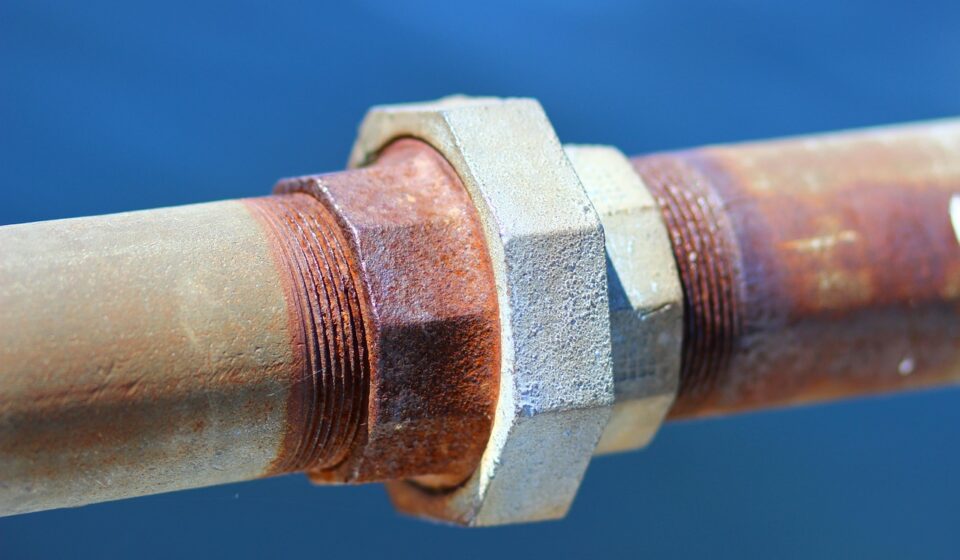
Galvanic corrosion deserves special attention when different metals are connected. A stainless steel component, copper line, carbon steel nipple and brass valve may each be acceptable in some contexts, but the combination can create corrosion risk if an electrolyte is present. Dielectric unions, insulating kits, material sequencing and water chemistry review can reduce that risk, but they should be specified deliberately rather than added after a failure appears.
A practical checklist for selecting metal pipes and fittings
A clear checklist reduces the chance of choosing a fitting based only on size or price. Before purchasing or specifying components, confirm the following items:
- Service fluid: Identify whether the line carries potable water, wastewater, steam, air, gas, oil, chemicals or process liquid.
- Pressure and temperature: Check normal operation, startup, shutdown, surge, test pressure and maximum temperature.
- Material compatibility: Match pipe, fitting, valve, gasket, seal and fastener materials to the fluid and environment.
- Dimensional standard: Confirm the applicable ASME, ASTM, AWWA, MSS or code-listed standard rather than relying on trade names alone.
- Joint method: Decide whether the system needs welding, threading, flanges, grooved couplings, press fittings, compression fittings or mechanical joints.
- Potable water requirements: For drinking water, verify lead-content and health-effects requirements such as EPA lead-free rules and NSF/ANSI/CAN 61 or 372 where applicable.
- Corrosion protection: Review coatings, linings, cathodic protection, soil conditions, insulation and dissimilar-metal contact.
- Inspection and maintenance: Consider access for testing, tightening, gasket replacement, valve service and future modifications.
- Documentation: Request material test reports, product markings, certifications or compliance statements when the application requires them.
The most common specification mistake is treating fittings as accessories instead of pressure-containing components. A fitting may be small, but it is part of the system boundary. If it fails, the result can be leakage, contamination, downtime, safety risk or code noncompliance.
Specification examples by system type
In a municipal buried water main, the main questions often involve ductile-iron or steel pipe standards, gasketed or restrained joints, lining and coating systems, soil exposure, thrust restraint and potable water certification. AWWA standards are usually central to these discussions because they address both product and installation practices for water utility work.
In an industrial steam or process line, the focus shifts to pressure-temperature ratings, weld quality, material grade, thermal expansion, support layout and inspection. ASME and ASTM references are more likely to define the fittings and materials, while plant piping codes and owner specifications govern fabrication and testing.
In commercial plumbing, the decision may revolve around code-approved materials, lead-free requirements, joining method, accessibility and contractor familiarity. Copper, stainless steel, brass and press systems may all be considered, but approvals and local code acceptance are just as important as installation speed.
These examples show why the same phrase, metal pipes and fittings, covers very different decisions. The right answer for a buried water line is not automatically right for a mechanical room, and the right fitting for compressed air is not automatically acceptable for potable water.
Frequently asked questions
Are stainless steel fittings always better than carbon steel fittings?
No. Stainless steel offers better corrosion resistance in many services, but it costs more and is not immune to all forms of corrosion. Carbon steel can be the practical choice for many industrial systems when pressure, temperature and corrosion control are properly addressed.
Can different metal pipe materials be connected together?
They can be connected in many systems, but the connection should be designed. Dissimilar metals in the presence of an electrolyte can create galvanic corrosion risk. The specification may need dielectric isolation, compatible adapters, coatings or a review of water chemistry.
What is the difference between NSF 61 and NSF 372?
NSF/ANSI/CAN 61 evaluates health effects related to contaminants and impurities that may be imparted to drinking water by system components. NSF/ANSI/CAN 372 focuses on lead-content verification for drinking water products. A potable water product may need one or both types of compliance depending on the application and local requirements.
Why do fittings need their own standards if the pipe already has a standard?
Fittings have different shapes, wall transitions, joint designs and stress points than straight pipe. Separate standards help control dimensions, materials, ratings, markings and testing so that components from different manufacturers can be specified and inspected consistently.
What should be checked first when replacing an old metal fitting?
Start with the service conditions and code requirements, not just the visible size. Confirm the fluid, pressure, temperature, pipe material, thread or flange type, potable water status and corrosion condition. If the old component failed, identify the cause before installing a like-for-like replacement.