A practical guide to welding tools and equipment for fabrication work
a[data-rs-seo-link]{text-decoration:underline!important;color:#1a56db!important;cursor:pointer!important;}a[data-rs-seo-link]{text-decoration:underline!important;color:#1a56db!important;cursor:pointer!important;}
What welding tools and equipment include
Welding tools and equipment include far more than the welding machine. A complete setup usually covers the power source, process-specific torch or electrode holder, leads, work clamp, filler metals, shielding gas or flux, preparation tools, workholding accessories, personal protective equipment, ventilation and fire-prevention controls.
The right combination depends on the welding process, base metal, material thickness, available power, work location and applicable safety requirements. For most fabrication and repair work, the objective is not to buy the largest machine available. It is to build a balanced system that can produce sound welds repeatedly while managing heat, fumes, arc radiation, fire risk and electrical hazards.
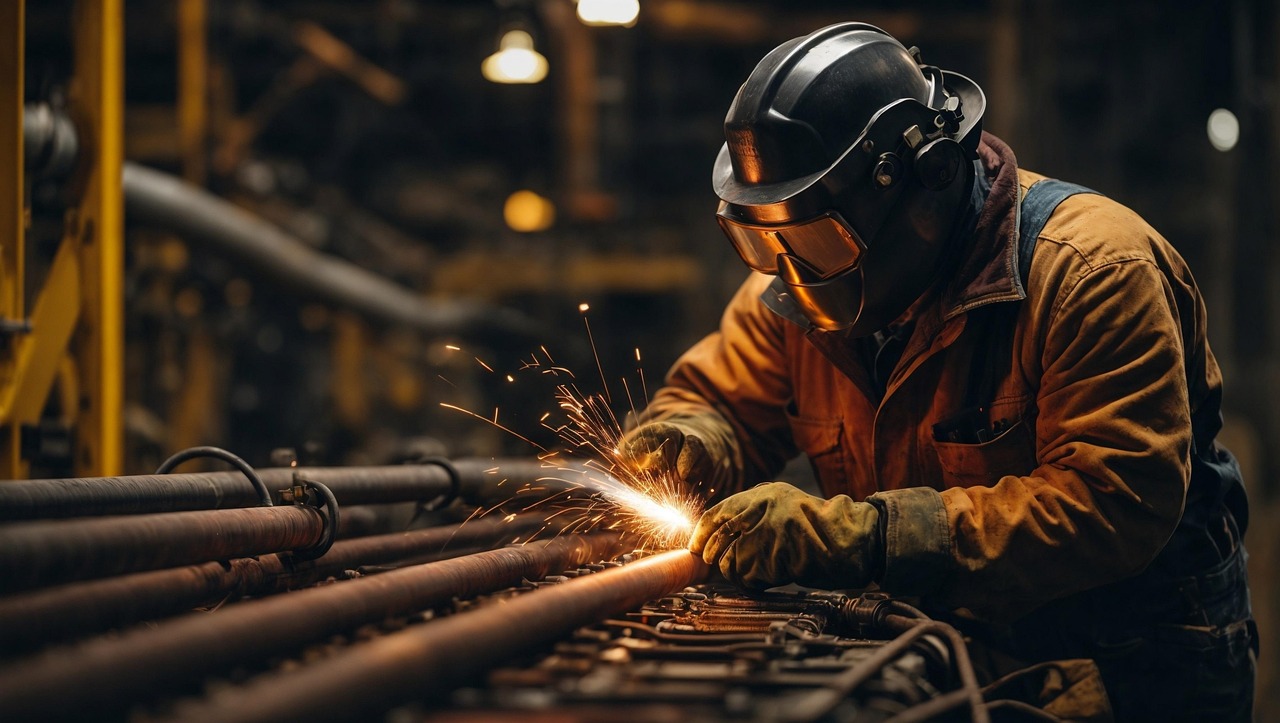
For related hardware and shop-use items, see the Tools and Accessories section. The framework below is intended for readers comparing welding setups for fabrication, maintenance, repair and light industrial work.
Start with the welding process, not the machine
Purchasing discussions often start with the welder itself, but the process should come first. MIG, TIG, stick, flux-cored and oxy-fuel systems use different accessories, consumables and safety controls. The American Welding Society uses formal process terms such as GMAW, GTAW, SMAW and FCAW, while shop language often refers to MIG, TIG, stick and flux-cored welding. Knowing both sets of terms helps when reading manuals, standards and purchasing specifications.
| Process | Core equipment | Common fit | Main limitations |
|---|---|---|---|
| MIG or GMAW | Wire-feed welder, MIG gun, contact tips, wire, shielding gas, regulator and work lead | General fabrication, automotive repair, mild steel and some aluminum setups | Shielding gas can be disrupted outdoors; liners, tips and gas flow need maintenance |
| Flux-cored or FCAW | Wire-feed welder, flux-cored wire, gun, work lead and sometimes shielding gas | Field repair, thicker steel and work where wind makes gas shielding difficult | More smoke and slag than solid-wire MIG; consumable selection matters |
| TIG or GTAW | TIG power source, torch, tungsten electrodes, filler rod, shielding gas and remote current control | Precision work, stainless steel, aluminum and thin material | Slower process; requires high coordination and clean material preparation |
| Stick or SMAW | Constant-current welder, electrode holder, work clamp, leads and covered electrodes | Outdoor work, maintenance, structural repair and less-than-perfect surfaces | Slag removal, electrode storage and operator skill affect results |
| Oxy-fuel cutting and heating | Oxygen and fuel cylinders, regulators, hoses, torch, tips and flashback protection | Cutting, heating, brazing and some repair operations | Requires strict gas-cylinder handling and fire prevention controls |
Core equipment categories to check before buying
Power sources and duty cycle
The power source should match the welding process, material thickness and available electrical supply. Key specifications include input voltage, output amperage range, AC or DC capability, duty cycle, polarity options and single-process or multiprocess capability.
Duty cycle is especially important in production or repair settings where long welds are common. A machine may be able to make a short weld on thick material, but still be unsuitable if it overheats during repeated work.
Torches, electrode holders, leads and work clamps
Torches, guns, electrode holders, cables and work clamps carry current and directly affect arc stability. Undersized cables, loose connections, damaged insulation or weak clamps can cause overheating, erratic arcs and unnecessary troubleshooting.
For MIG and flux-cored work, check gun rating, liner condition, drive-roll compatibility and contact-tip size. For TIG work, torch size, cooling method, collet condition and tungsten selection matter. For stick welding, electrode holder condition and lead length are practical reliability issues.
Gas delivery and consumables
Shielding gas equipment includes cylinders, regulators, flowmeters, hoses, fittings and, where applicable, gas lenses or nozzles. Consumables include wire, electrodes, filler rods, tungsten, contact tips, nozzles, diffusers, liners, cups, anti-spatter products and abrasives.
Consumables should be matched to the base metal, process, joint design and required weld properties. Poor consumable matching can make a capable machine perform poorly.
Preparation, measuring and workholding tools
Weld quality starts before the arc. Common preparation and fit-up tools include angle grinders, flap discs, wire brushes, files, deburring tools, clamps, locking pliers, magnets, squares, tape measures, soapstone, scribes, center punches and chipping hammers.
Stainless steel work should use dedicated brushes and abrasives to reduce cross-contamination. Workholding accessories are not optional extras; they help control joint gap, distortion and repeatability.
Safety equipment is part of the tool list
Safety gear should be treated as essential welding equipment, not as an accessory purchased after the machine. OSHA welding and eye-protection rules require suitable protection against arc radiation, sparks, spatter and airborne hazards, while ANSI Z49.1:2021 provides widely used safe-practice guidance for welding, cutting and allied processes. NIOSH guidance also emphasizes that welding fume risk depends on exposure level, process, base metal, coatings and ventilation.
| Hazard | Equipment or control | Why it matters |
|---|---|---|
| Arc radiation and flying particles | Welding helmet with appropriate filter shade, safety glasses and face protection | OSHA specifies that filter lenses must match the operation and radiant-energy exposure |
| Heat, sparks and spatter | Flame-resistant clothing, welding gloves, leather sleeves or jacket and suitable boots | Synthetic fabrics can melt or ignite; exposed skin can burn quickly |
| Welding fumes | Local exhaust ventilation, fume extraction and respirators when required by exposure assessment | Fume composition changes with metal, coating, wire, flux and process conditions |
| Fire and explosion | Fire-resistant screens, extinguisher, cleared combustibles, fire watch and hot-work authorization where required | NFPA 51B and OSHA guidance both treat hot work as a fire-prevention issue |
| Compressed gas | Secured cylinders, correct regulators, hose inspection and separation from sparks or flame | Oxygen and fuel-gas systems add pressure, ignition and handling hazards |
| Noise and grinding debris | Hearing protection, guards, eye protection and dust control | Grinding, cutting and arc processes can create combined exposure risks |
Confined spaces require additional planning. OSHA rules for welding and cutting in confined spaces address ventilation, positioning of cylinders and machines, and rescue planning. Welding inside tanks, vessels or small compartments should never be treated as ordinary bench work. Coated, painted or galvanized metals also require hazard review because heating coatings can create additional fumes.
Match tools to materials and workplaces
Mild steel is more forgiving than many alloys, but it still requires correct amperage, filler selection, surface preparation and fit-up. For light-gauge steel, stable low-end output and precise wire-feed control may be more valuable than maximum amperage. For thicker steel, higher output, adequate duty cycle, joint preparation and multi-pass capability become more important.
Stainless steel can require tighter heat control and better fume management, especially because stainless welding fumes may contain chromium and nickel compounds. TIG is often selected for clean, precise stainless work, while MIG and flux-cored processes are used where productivity and joint size justify them. See also: Buying Guides.
Aluminum creates different equipment demands because of oxide removal, high thermal conductivity and wire-feeding challenges. AC TIG, spool guns or push-pull guns may be considered depending on thickness and production volume.
Outdoor and jobsite work also changes the tool list. Wind can disturb shielding gas, making stick or self-shielded flux-cored welding more practical in some conditions. Long leads, portable power, engine-driven machines, weather protection and rugged storage may matter more than fine bench controls. In a fixed shop, priorities may shift toward fume extraction, dedicated fixture tables, organized consumable storage, repeatable setup and efficient material flow.
A practical selection workflow
- Define the work. Identify base metal, thickness range, joint type, welding position and expected appearance or strength requirements.
- Check applicable rules. If the work is structural, pressure-related, safety-critical or contract-controlled, confirm whether a welding procedure specification, qualified welder or inspection requirement applies.
- Select the process. Choose MIG, TIG, stick, flux-cored or oxy-fuel based on material, location, productivity, skill level and finish requirements.
- Size the power source. Compare amperage range, input power, duty cycle, portability and AC/DC capability.
- Build the accessory list. Include torches, leads, clamps, gas equipment, filler metals, replacement tips, nozzles, liners, tungsten, electrodes and abrasives.
- Plan safety controls. Add helmet, glasses, gloves, clothing, ventilation, fire controls, screens and cylinder-handling equipment before work starts.
- Verify maintenance support. Check manual availability, replacement parts, consumable availability and service access.
- Test and document settings. Record settings that work on common joints so future repairs and repeat jobs are easier to reproduce.
This workflow helps avoid a common purchasing mistake: buying a welder first and discovering later that the shop lacks the correct power, gas, ventilation, fixturing or consumables to use it properly.
Maintenance and inspection habits that protect results
Welding equipment needs routine inspection because small faults often show up as weld-quality problems. Before use, check cables, insulation, plugs, work clamps, torch bodies, electrode holders and gas hoses. Look for loose fittings, cracked hoses, worn contact tips, damaged liners, contaminated tungsten, blocked nozzles and poor work-lead connections. A drifting wire feed or unstable arc may come from a simple consumable issue rather than a failed machine.
Gas systems should be handled carefully and checked according to the equipment maker’s instructions. Cylinders should be secured upright and kept away from sparks, flame and hot slag. Regulators should be used only for the gas and pressure range they are designed for.
Grinding tools need guards, correct wheel ratings and inspection for damage. Filler metals and electrodes should be stored in conditions recommended by the manufacturer, particularly where moisture control affects weld quality.
Good storage is also a productivity tool. A labeled consumable cabinet, separate stainless brushes, organized clamps, clean gas nozzles and spare contact tips can reduce downtime. In many shops, better organization improves weld consistency as much as buying a more expensive machine.
Frequently asked questions
What welding tools and equipment does a beginner need first?
A basic beginner setup usually includes a suitable welding machine, torch or electrode holder, work clamp, leads, correct filler metal, helmet, safety glasses, gloves, flame-resistant clothing, clamps, grinder, wire brush, measuring tools and fire-safety equipment. The exact list depends on whether the beginner is learning MIG, TIG, stick or flux-cored welding.
Is a multiprocess welder a good choice?
A multiprocess welder can be useful when space, budget or job variety matters. However, it should still be evaluated by its actual output, duty cycle, process limitations and accessory requirements. Some multiprocess machines perform one process better than another, so the primary use should guide the purchase.
What PPE is essential for welding?
Essential PPE includes a welding helmet with the correct filter shade, safety glasses, welding gloves, flame-resistant clothing and suitable footwear. Depending on the process and exposure assessment, hearing protection and respiratory protection may also be necessary. Ventilation and fire prevention should be planned along with PPE.
Can one welding setup handle steel, stainless steel and aluminum?
One setup may handle several metals if it has the right process capability and accessories, but each material has different needs. Stainless steel often requires careful heat and fume control. Aluminum may require AC TIG or specialized wire-feeding equipment. Consumables, shielding gas and preparation tools should be matched to the material.
How often should welding equipment be inspected?
High-use equipment should be checked before each work session for obvious damage, loose connections, gas leaks, worn consumables and blocked ventilation paths. More detailed inspection and servicing should follow the manufacturer’s manual and the workplace safety program.