Screw fasteners explained for materials, standards and installation choices
a[data-rs-seo-link]{text-decoration:underline!important;color:#1a56db!important;cursor:pointer!important;}a[data-rs-seo-link]{text-decoration:underline!important;color:#1a56db!important;cursor:pointer!important;}
What screw fasteners are and why selection matters
Screw fasteners are threaded mechanical components used to clamp, attach, locate or adjust parts. They may drive directly into wood, sheet metal, plastic, masonry or a pre-tapped hole, or they may be used with nuts and inserts as part of a threaded joint. Selection is not just a matter of diameter and length. Thread form, head style, drive type, material, strength class, coating, mating material and installation method all influence whether the joint holds, corrodes, loosens, strips or damages the assembly.
For buyers, designers, maintenance teams and installers, the useful question is not simply “Which screw is strongest?” A better question is “Which screw fastener matches the load, material, environment and service access of this joint?” This guide explains the main choices and the trade-offs behind them. For broader category reading, see the Fasteners section.
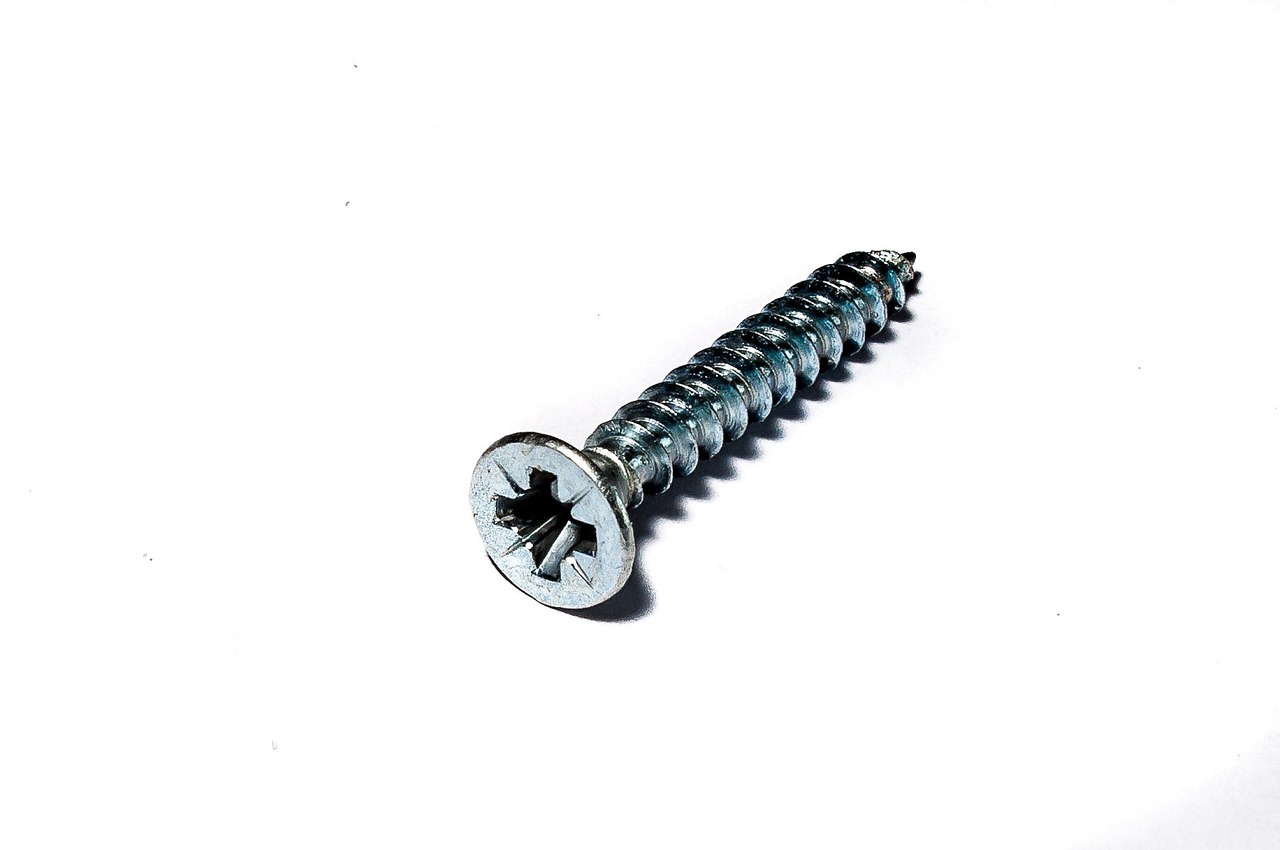
How screw fasteners differ from bolts and other threaded fasteners
The boundary between a screw and a bolt is not always sharp in everyday language. In many practical settings, a screw is driven by torque applied to its head and either forms or engages internal threads in the receiving material. A bolt is commonly used with a nut or tapped component and is often specified as part of a bolted joint. Standards and industry catalogs also use names such as hex cap screw, socket head cap screw, machine screw and self-tapping screw, so the label alone is not enough to define the application.
A more reliable approach is to describe the functional features:
- Thread type: machine thread, wood thread, tapping thread, thread-forming thread, thread-cutting thread or concrete thread.
- Head style: pan, flat, oval, hex, socket, button, truss, flange or bugle head.
- Drive type: slotted, Phillips, Pozidriv, hex socket, Torx-style, square, external hex or combination drive.
- Point style: sharp, blunt, drill point, cone point, cup point or dog point.
- Material and finish: carbon steel, alloy steel, stainless steel, brass, aluminum or specialty alloys with suitable coatings.
This feature-based description reduces ambiguity and helps prevent common ordering errors, such as buying a screw with the correct diameter but the wrong thread pitch, head bearing area or corrosion protection.
Main types of screw fasteners and their common uses
Most screw fastener decisions begin with the receiving material. A screw designed to engage a tapped steel hole is different from one designed to bite into timber, displace plastic, cut sheet metal or anchor into concrete. The groups below are not the only categories, but they cover many day-to-day industrial, construction and repair uses.
Machine screws and cap screws
Machine screws use uniform machine threads and are normally installed into tapped holes, threaded inserts or nuts. They are common in equipment housings, electrical enclosures, appliance assemblies, brackets and light mechanical joints. Cap screws are generally stronger and more precisely defined than ordinary small screws, especially when specified by recognized dimensional and mechanical standards. Socket head cap screws, for example, are often selected where high clamping force and compact head geometry are useful.
Hexagon head screws and hex cap screws are widely used when wrench access is available. International standards such as ISO 4017:2022 define characteristics for metric hexagon head screws with coarse pitch threads in steel and stainless steel. That type of standard is mainly dimensional; it does not by itself answer every question about strength, stainless grade, coating or installation torque.
Wood screws, deck screws and construction screws
Wood screws are designed to grip timber and wood-based panels. Their threads are typically deeper and sharper than machine screw threads, and many have a partially unthreaded shank so the top workpiece can be pulled tightly against the base material. Construction and deck screws often include features intended to reduce splitting, improve driving speed or increase corrosion resistance in outdoor exposure.
Selection should consider wood species, moisture, preservative treatment, pilot hole needs and exposure. A screw that performs well in dry interior framing may be unsuitable for an exterior deck or treated lumber if the coating and base metal are not compatible with the environment.
Sheet metal, tapping and thread-forming screws
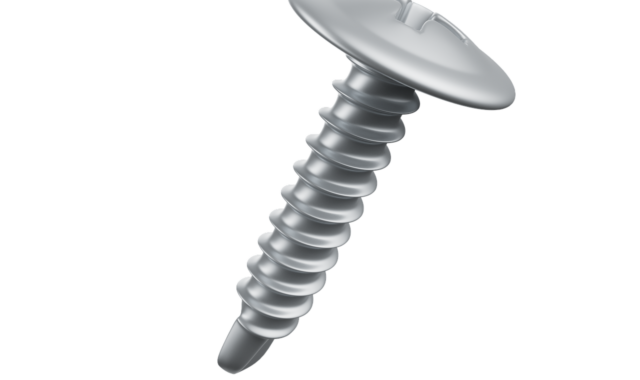
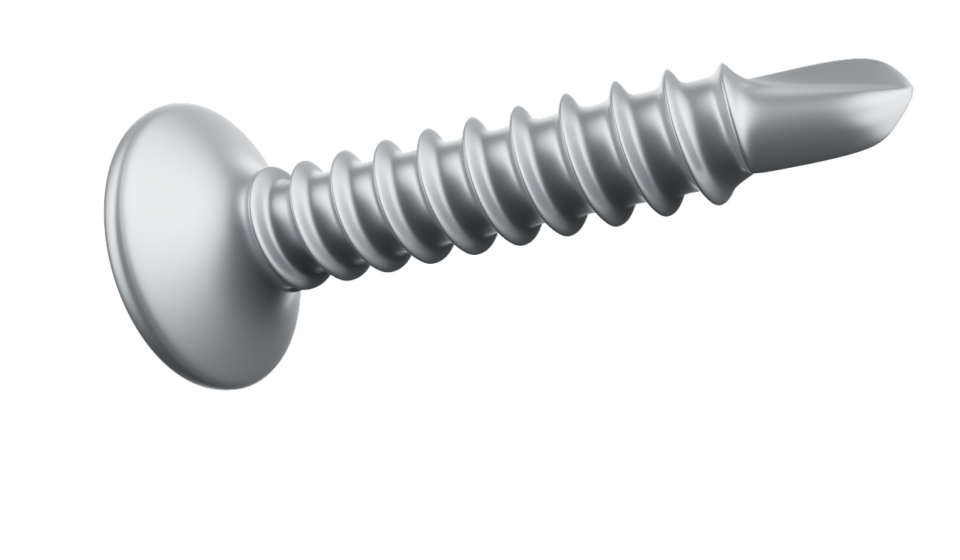
Sheet metal screws and tapping screws are used where the fastener creates or engages threads in relatively thin material. Thread-cutting screws remove material as they form the mating thread, while thread-forming screws displace material without producing the same kind of chips. The right choice depends on sheet thickness, ductility, vibration, service removability and the risk of cracking or stripping.
For plastics, thread-forming screws are often preferred over ordinary sheet metal screws because the thread profile can be designed to reduce stress and improve pull-out resistance. Even then, boss design, pilot hole diameter and installation speed matter. Excess torque can crack plastic long before the screw itself fails.
Set screws and positioning screws
Set screws are often headless and are used to hold a collar, gear, pulley or knob against a shaft. Their point geometry affects performance. A cup point can bite into a surface, a flat point reduces marking, a cone point provides more aggressive holding, and a dog point can locate into a hole or groove. These screws are less about broad clamping area and more about controlled contact at a specific point.
Because set screws concentrate load, they require careful consideration of shaft hardness, vibration and removability. In some assemblies, a keyway, clamp collar or other positive drive feature may be more reliable than relying only on point pressure.
Material, strength and coating choices
The base material determines mechanical capacity, corrosion behavior, temperature limits and compatibility with the parts being joined. Carbon steel is common because it is economical and can be heat treated for higher strength. Alloy steel is used where higher tensile strength, fatigue resistance or wear performance is needed. Stainless steel is selected for corrosion resistance, appearance and cleanability, but stainless grades vary significantly; a general stainless label is not a full specification.
Brass and aluminum screws may be useful where low weight, appearance, conductivity or nonmagnetic behavior matters, but they are usually not substitutes for high-strength steel fasteners. Specialty alloys may be needed for high-temperature, marine, chemical processing or electrical applications. In critical service, the material should be specified by a recognized grade or standard rather than by a broad trade name.
Coatings add another layer of choice. Zinc plating is common for general corrosion resistance in indoor or mild environments. Hot-dip galvanizing, mechanical galvanizing, zinc flake, phosphate, nickel, chrome, epoxy and ceramic-style coatings may be selected for different exposure, appearance or friction requirements. Coating thickness can affect thread fit, especially on small screws and fine threads. Coatings also change friction, which means the same torque can produce a different clamp load. See also: Buying Guides.
| Choice | Typical reason for use | Watch point |
|---|---|---|
| Carbon steel | General strength and cost efficiency | Needs suitable coating in corrosive environments |
| Alloy steel | Higher strength or wear resistance | May need corrosion protection and careful heat-treatment control |
| Stainless steel | Corrosion resistance and appearance | Grade, galling risk and strength class must be checked |
| Brass | Decorative, electrical or low-sparking uses | Lower strength than many steels |
| Aluminum | Low weight and corrosion resistance | Thread damage and galvanic compatibility need attention |
Standards that shape screw fastener specifications
Fastener standards help turn a vague description into a controlled specification. They may define dimensions, threads, tolerances, materials, mechanical properties, testing, surface discontinuities, coatings, markings or acceptance criteria. No single standard covers every aspect of every screw. A complete specification often combines several references.
For metric fasteners, ISO standards are commonly used for dimensional and mechanical requirements. For example, ISO 4017:2022 covers metric hexagon head screws with product grades A and B, while mechanical properties may be addressed through related standards for carbon steel or corrosion-resistant stainless steel fasteners. For U.S. and inch-series applications, ASTM, ASME and IFI documents are frequently encountered. ASTM fastener standards include specifications for stainless steel bolts, hex cap screws, studs, socket set screws and other externally threaded products. ASME standards are often used for inch-series dimensions and thread forms, while IFI publications compile and coordinate many industrial fastener practices.
The practical lesson is simple: do not assume that a catalog name is a complete engineering requirement. “M8 stainless socket screw” leaves too many questions open. A stronger specification might include thread pitch, length, head style, drive type, stainless group, strength class, coating if any, applicable dimensional standard, required inspection level and packaging or marking requirements. In purchasing, those details reduce substitution risk. In maintenance, they help ensure the replacement screw behaves like the original.
Fit, thread engagement and installation variables
Even a correctly specified screw can fail if the joint design or installation method is wrong. Important installation variables include pilot hole size, tapped hole quality, thread engagement length, seating surface, torque control, lubrication, driver fit and reuse policy.
Thread engagement deserves particular attention. Too little engagement can strip internal threads or reduce pull-out resistance. Excessive engagement does not always increase capacity once the limiting thread strength has already been reached, and it can add cost, drilling depth or assembly time. The right engagement depends on screw material, internal thread material, thread pitch and load direction. Soft materials such as aluminum, plastic and wood often require more engagement or a different thread form than steel.
Torque is also easy to misunderstand. Torque is only an indirect way to create clamp load. Friction under the head and in the threads consumes much of the applied torque, so changes in coating, lubrication, surface roughness or washer use can change the resulting clamp force. In critical assemblies, torque values should come from the fastener supplier, engineering specification or validated testing for the actual joint, not from a generic chart alone.
Drive fit is a small detail with large consequences. A poorly matched bit can cam out, strip the recess or leave the screw under-tightened. External hex and socket drives can transmit higher torque, but they still require correct tool size and alignment. Automated screwdriving adds more variables, including speed, seating detection, torque-angle control and bit wear.
Common selection mistakes and how to avoid them
Many screw fastener problems are predictable. They usually come from incomplete specifications, mismatched materials or assumptions carried over from a different application. The following checklist helps reduce avoidable failures.
- Using indoor screws outdoors: A bright or lightly plated finish may look acceptable at purchase but corrode quickly in weather, treated wood or coastal exposure.
- Ignoring galvanic compatibility: Dissimilar metals in the presence of an electrolyte can accelerate corrosion. Stainless screws in aluminum, for example, may require isolation or a suitable coating strategy depending on the environment.
- Specifying strength without ductility: A very hard screw may be strong in tension but less forgiving under impact, bending or improper installation.
- Mixing thread systems: Metric and inch threads, or coarse and fine pitches, can appear similar at a glance. Forced assembly damages both internal and external threads.
- Overlooking head bearing area: A small head can embed into soft material. A washer, flange head or larger head style may be needed to distribute load.
- Reusing damaged screws: Stretched, corroded, cross-threaded or recess-damaged screws may not provide predictable clamp load.
- Assuming stainless always solves corrosion: Stainless grade, surface condition, chloride exposure and crevice geometry all affect corrosion performance.
A useful specification workflow starts with the joint function, then defines the environment, screw family, thread, material, coating and installation method. This order helps avoid choosing a convenient screw first and trying to justify it later.
Frequently asked questions
Are screw fasteners and bolts the same thing?
They overlap, but they are not always used the same way. Screws are often driven into tapped or self-formed threads, while bolts are commonly paired with nuts or threaded components. Because terminology varies by standard and industry, the safest approach is to specify the exact thread, head, material, grade and standard rather than relying only on the word “screw” or “bolt.”
Which screw material is best for corrosion resistance?
There is no single best material for every environment. Stainless steel is often used for corrosion resistance, but the grade must match the exposure. Coated carbon steel can be appropriate in many indoor, construction or automotive settings. Marine, chemical and high-temperature environments may require more specialized materials or coatings.
Does a higher strength screw always make a better joint?
No. A stronger screw can still fail if the internal threads strip, the head embeds into the material, the coating is wrong, or the joint is tightened incorrectly. Joint performance depends on the complete assembly, not only on the fastener’s tensile strength.
Why do coatings affect installation torque?
Coatings change friction between the threads and under the screw head. Since torque is partly consumed by friction, two screws of the same size and strength can create different clamp loads at the same torque if their coatings or lubricants differ.
What information should be included when ordering screw fasteners?
A clear order should include size, thread pitch, length, head style, drive type, point type if relevant, material, strength or property class, coating, standard reference, quantity and any inspection or packaging requirements. For safety-related or load-bearing joints, engineering approval should define the final specification.