Automotive fasteners explained for modern vehicle manufacturing
a[data-rs-seo-link]{text-decoration:underline!important;color:#1a56db!important;cursor:pointer!important;}a[data-rs-seo-link]{text-decoration:underline!important;color:#1a56db!important;cursor:pointer!important;}
What automotive fasteners do in a vehicle
Automotive fasteners are the bolts, screws, nuts, washers, clips, rivets, studs and specialty joining parts that hold a vehicle together while managing vibration, load, heat, corrosion and serviceability. In modern vehicle manufacturing, they are not treated as simple commodity items. Each fastener has to suit the joint design, material stack, torque strategy, coating system, production process and repair requirements. The right part helps maintain clamp load and alignment; the wrong part can contribute to loosening, corrosion, leakage, noise or safety-related failure.
That is why automotive engineers and purchasing teams evaluate fasteners through standards, test data and process controls, not price alone. For a broader category view of industrial fastening components, see the Fasteners section. The practical question is not only which fastener is strongest, but which fastener is appropriate for the assembly, environment and production method.

Main types of automotive fasteners
Vehicles use thousands of fastening points, and those points do not all serve the same purpose. Some fasteners are designed to be removed during service, while others are intended as permanent or semi-permanent joints. Some carry structural load; others position trim, seal covers or organize wire harnesses. Understanding the application is the first filter in any fastener decision.
| Fastener type | Typical vehicle use | Key selection concern |
|---|---|---|
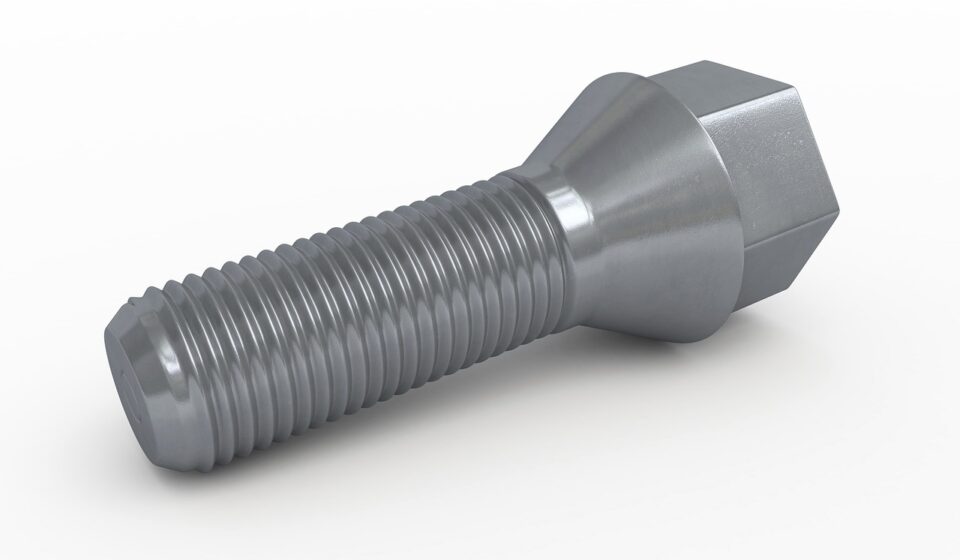
| Bolts and screws | Powertrain, chassis, suspension, brackets, body and battery structures | Strength class, thread engagement, torque-tension behavior and fatigue resistance |
| Nuts and washers | Bolted joints, wheel-related assemblies, brackets and structural interfaces | Load distribution, prevailing torque, bearing surface and compatibility with mating bolts |
| Studs | Engine, exhaust, wheel hub and assembly-location applications | Installation stability, heat exposure, thread damage risk and service access |
| Rivets and blind fasteners | Body-in-white, panels, mixed-material joining and enclosed sections | Grip range, access from one or both sides, corrosion isolation and joint stiffness |
| Plastic clips and retainers | Interior trim, splash shields, wiring, ducts and lightweight covers | Retention force, temperature aging, vibration, ease of assembly and removability |
| Self-tapping and thread-forming screws | Sheet metal, plastic housings, electronic modules and trim assemblies | Material thickness, thread formation, stripping resistance and repeat service limits |
A fastener that performs well in an interior trim panel may be entirely unsuitable for a suspension bracket. The load path, environment and expected maintenance cycle determine whether a threaded, clipped, riveted or bonded-and-fastened joint is the better choice.
Materials, strength grades and coatings
Material selection starts with the joint requirement. Carbon steel and alloy steel remain common for high-load threaded fasteners because they can deliver predictable mechanical properties after heat treatment. Stainless steel is used where corrosion resistance is more important, although stainless grades are not interchangeable with high-strength alloy steel. Aluminum, brass, engineered plastics and specialty alloys also appear in vehicles, usually for specific reasons such as weight reduction, electrical behavior, appearance or chemical resistance.
Standards help prevent vague descriptions such as strong bolt or stainless screw from becoming purchasing specifications. SAE J429 covers mechanical and material requirements for inch-series steel bolts, screws, studs and related externally threaded fasteners used in automotive and related industries. ISO 898-1:2013 addresses mechanical properties for carbon steel and alloy steel bolts, screws and studs with specified metric property classes. ISO 3506-1:2020 covers corrosion-resistant stainless steel bolts, screws and studs with specified grades and property classes. These standards do not replace engineering judgment, but they give designers and suppliers a shared vocabulary.
Surface treatment is just as important as base material. Zinc plating, zinc flake coatings, phosphate coatings, mechanical plating, organic topcoats and other systems are used to manage corrosion, friction and assembly performance. The coating choice can also change torque-tension behavior. A bolt tightened to the same torque may produce a different clamp load if the coating, lubricant or bearing surface changes. For that reason, torque/clamp force testing standards such as ISO 16047 are relevant when threaded joints require controlled assembly behavior.
High-strength steel fasteners also require careful attention to hydrogen embrittlement risk. ASTM F1940-07a(2024) describes a process-control verification method intended to help prevent internal hydrogen embrittlement in plated or coated fasteners. For automotive use, the key point is straightforward: corrosion protection should not be specified in isolation. Coating, strength level, cleaning process, baking practice, friction performance and supplier controls have to be considered together.
Standards and documentation that shape selection
Automotive fastener quality depends on both the part and the evidence behind the part. A drawing may define thread size, length, head style, material, property class, finish, friction range, special testing and packaging requirements. In production, those requirements are supported by inspection records, material certificates, heat-treatment records, coating controls, dimensional reports and lot traceability.
For U.S. commerce, the Fastener Quality Act is a useful reminder that certain fasteners are subject to grade identification, manufacturer insignia and conformance-record expectations. NIST guidance and the USPTO Fastener Quality Act insignia register both emphasize traceability as a central concept. The act does not mean every small vehicle clip carries the same requirement, but it illustrates why industrial fasteners are often managed by lot, grade and manufacturer identification rather than by appearance alone.
Automotive supply chains often add their own approval systems. IATF 16949:2016 defines quality management system requirements for automotive production, service and accessory parts when used with applicable customer-specific requirements. AIAG core tools, including APQP and PPAP, are widely used to show that a supplier can consistently manufacture parts that meet engineering and customer requirements. For fasteners, this may include dimensional layouts, material test results, coating verification, capability studies and evidence that special characteristics are controlled.
The documentation burden may look heavy for a small component, but the reason is practical. A loose, under-strength, over-hardened, miscoated or misidentified fastener can affect the entire assembly around it. Good documentation makes it easier to trace a concern, isolate affected lots and prevent recurrence.
Why installation quality matters as much as fastener strength
A correct fastener can still fail in use if it is installed incorrectly. Threaded joints rely on clamp load, and clamp load is influenced by torque, friction, joint stiffness, thread condition, under-head bearing surface, lubrication and assembly speed. Over-tightening can yield or break a fastener. Under-tightening can allow movement, fretting, leakage or loosening. Cross-threading, contamination and damaged coatings can also change the result.
Public NHTSA recall filings periodically show that loose or improperly tightened bolts can become safety concerns in real vehicles, including assemblies related to suspension, brakes, trailer hitches, seat anchors and structural brackets. These filings should not be read as evidence that most fasteners fail. They show why assembly controls matter. Vehicle manufacturers use controlled tools, error-proofing, torque-angle strategies, joint validation and audit systems because fastening is a process, not just a bill-of-material item. See also: Buying Guides.
In critical joints, torque alone may not be enough. Torque-angle tightening, direct tension indicators, prevailing-torque features, thread-locking patches, locking nuts, serrated interfaces or redesigned joint geometry may be used depending on the application. The better solution is not always a stronger bolt. Sometimes it is improved access for the tool, a more stable washer face, a cleaner thread, a revised coating or a joint design that is less sensitive to relaxation.
Design trends changing automotive fastening choices
Electrification, lightweighting and mixed-material construction are changing how automotive fasteners are selected. Battery electric vehicles add large enclosures, underbody protection, thermal systems, high-voltage routing and serviceable battery pack interfaces. These areas can require corrosion-resistant fasteners, reliable sealing, electrical isolation or controlled conductivity, depending on the joint. A fastening decision may also affect repairability, recycling and automated assembly.
Mixed-material structures create another challenge. Steel, aluminum, magnesium, composites and plastics expand differently with temperature and may introduce galvanic corrosion risks when combined with an unsuitable fastener or coating. A rivet, screw or bolt may need an isolation layer, sealant, coating or washer system to avoid premature corrosion. In some joints, adhesives and mechanical fasteners work together: the adhesive can distribute load and seal the interface, while the fastener provides positioning, immediate handling strength or service retention.
Lightweight design also changes the meaning of strength. A high-strength fastener in a thin or soft substrate can simply damage the mating material. Engineers must balance tensile strength, shear strength, head bearing area, thread engagement and the local stiffness of the joined parts. As more vehicle assemblies include aluminum castings, extrusions and polymer components, thread-forming behavior and joint relaxation become as important as nominal bolt grade.
A practical checklist for specifying automotive fasteners
Fastener selection should begin with the joint, not the catalog page. The following checklist can help engineers, buyers and quality teams ask better questions before locking in a part number.
- Define the function. Is the fastener structural, sealing, locating, grounding, cosmetic, temporary or serviceable?
- Identify the load case. Consider tensile load, shear load, fatigue, vibration, impact, thermal cycling and joint relaxation.
- Match the material system. Check compatibility with steel, aluminum, magnesium, stainless steel, plastics, composites and coatings.
- Specify the standard clearly. Use recognized standards such as SAE, ISO or ASTM where applicable, including revision and property class or grade.
- Control the surface finish. Define corrosion resistance, friction range, appearance, thickness limits and hydrogen embrittlement controls where relevant.
- Validate installation. Confirm torque, angle, tool access, thread condition, lubrication state and whether the joint can be assembled consistently in production.
- Plan traceability. Require lot control, manufacturer identification, certificates and inspection records appropriate to the risk level.
- Consider service and repair. Decide whether the fastener is reusable, single-use, replace-on-removal or part of a controlled service kit.
This checklist is deliberately broader than size and strength. In automotive applications, the part that is easiest to buy may not be the part that is easiest to assemble, inspect, trace or repair.
Frequently asked questions
Are automotive fasteners different from general industrial fasteners?
Many automotive fasteners look similar to general industrial fasteners, but the specification and approval process is often more demanding. Automotive applications may require controlled friction, lot traceability, PPAP evidence, corrosion testing, special coatings, vibration resistance or customer-specific requirements that go beyond a basic catalog description.
What standards are commonly associated with automotive fasteners?
Common references include SAE J429 for inch-series externally threaded steel fasteners, ISO 898-1 for metric carbon and alloy steel bolts, screws and studs, ISO 3506-1 for corrosion-resistant stainless steel fasteners and ISO 16047 for torque/clamp force testing. ASTM standards are also used for coatings, hydrogen embrittlement control and specific fastener categories.
Why can coating change fastener performance?
Coating affects corrosion resistance, friction and sometimes dimensional fit. Because torque produces clamp load through friction-sensitive surfaces, a change in coating or lubricant can alter the actual tension in the joint. This is why coating selection should be validated with the intended assembly method.
Are stronger fasteners always better in vehicles?
No. A stronger fastener can be inappropriate if the mating material is thin, soft or sensitive to stress concentration. The best choice depends on the full joint design, including substrate strength, thread engagement, fatigue behavior, corrosion exposure, installation method and service needs.
What is the main purchasing risk with automotive fasteners?
The main risk is treating fasteners as interchangeable commodities when they are actually engineered parts. A low-cost substitution can change strength, coating, friction, traceability or installation behavior. For safety-related or high-load joints, any substitution should be reviewed against the drawing, standards and process requirements before use.