Baseball field maintenance tips for safer, more playable diamonds
a[data-rs-seo-link]{text-decoration:underline!important;color:#1a56db!important;cursor:pointer!important;}a[data-rs-seo-link]{text-decoration:underline!important;color:#1a56db!important;cursor:pointer!important;}
What a good maintenance routine should accomplish
Baseball field maintenance tips are most useful when they focus on safety, drainage, and consistent play, not appearance alone. A sound routine keeps the infield skin firm without becoming dusty, maintains level mound and batter’s box areas, supports turf dense enough for regular traffic, and keeps grass-to-dirt edges from developing hazardous lips. Public guidance from Penn State Extension, NC State Extension, Cornell Sports Field Management, the Sports Field Management Association, and the MLB Baseball Tomorrow Fund field guide all point to the same principle: small, frequent maintenance helps prevent larger repairs later.
For more field and facility upkeep topics, visit the Maintenance Tips section.
The working routine is straightforward: inspect the field before use, repair high-wear areas after every event, manage moisture, and schedule deeper turf work during recovery windows. The sections below organize those tasks into a practical program for many school, park, and community baseball fields.
Start with grade, drainage, and moisture
The infield skin is not just dirt. It is a managed playing surface that must shed water, give a predictable ball response, and provide secure footing for running, sliding, and fielding. If the surface has low spots, puddles will return after rain no matter how carefully the field is dragged. For that reason, experienced field managers often treat puddles as signs of grade problems, not isolated spots to push away.
After rain, avoid sweeping, squeegeeing, or raking water into the grass. That practice can move infield material into the turf, build lips along the edge, and make the original low spot worse. If standing water must be removed, use a pump, puddle sponge, or absorbent tool designed for athletic fields, then let the skin dry enough for repair. Once the surface is workable, pull loose infield mix into the low area, level it, water if needed, and tamp it so the repair bonds with the surrounding surface.
Moisture control is as important as grading. A dry skin becomes dusty, loose, and vulnerable to wind movement. A wet skin can rut, cleat, and become slippery. The target is a firm, cohesive surface that can be groomed without smearing. On many community fields, the safest decision is to postpone play when the field is too wet to support stable footing or when maintenance work would damage the grade.
Use a consistent daily infield skin routine
Most infield problems are easier to control when crews follow the same basic sequence before and after each game or practice. The routine does not need to be complicated, but it should be consistent.
- Inspect first. Walk the field and look for holes, loose bases, rocks, debris, wet areas, exposed edges, and uneven transitions.
- Repair the mound, plate area, and sliding zones. Pull loose material back into holes, add compatible clay or infield mix where needed, and tamp repairs firmly.
- Moisten the skin before aggressive grooming. Nail dragging a bone-dry surface can create dust and separate materials instead of loosening the profile evenly.
- Nail drag only when conditions allow. Use shallow passes to loosen compacted areas, not deep cuts that disturb the base or create new low spots.
- Finish drag slowly. Fast dragging moves material unevenly and can create waves. A slow, controlled pattern helps keep the surface level.
- Stay away from grass edges. The MLB Baseball Tomorrow Fund guide recommends keeping drags at least six inches from the turf edge and using hand tools near grass.
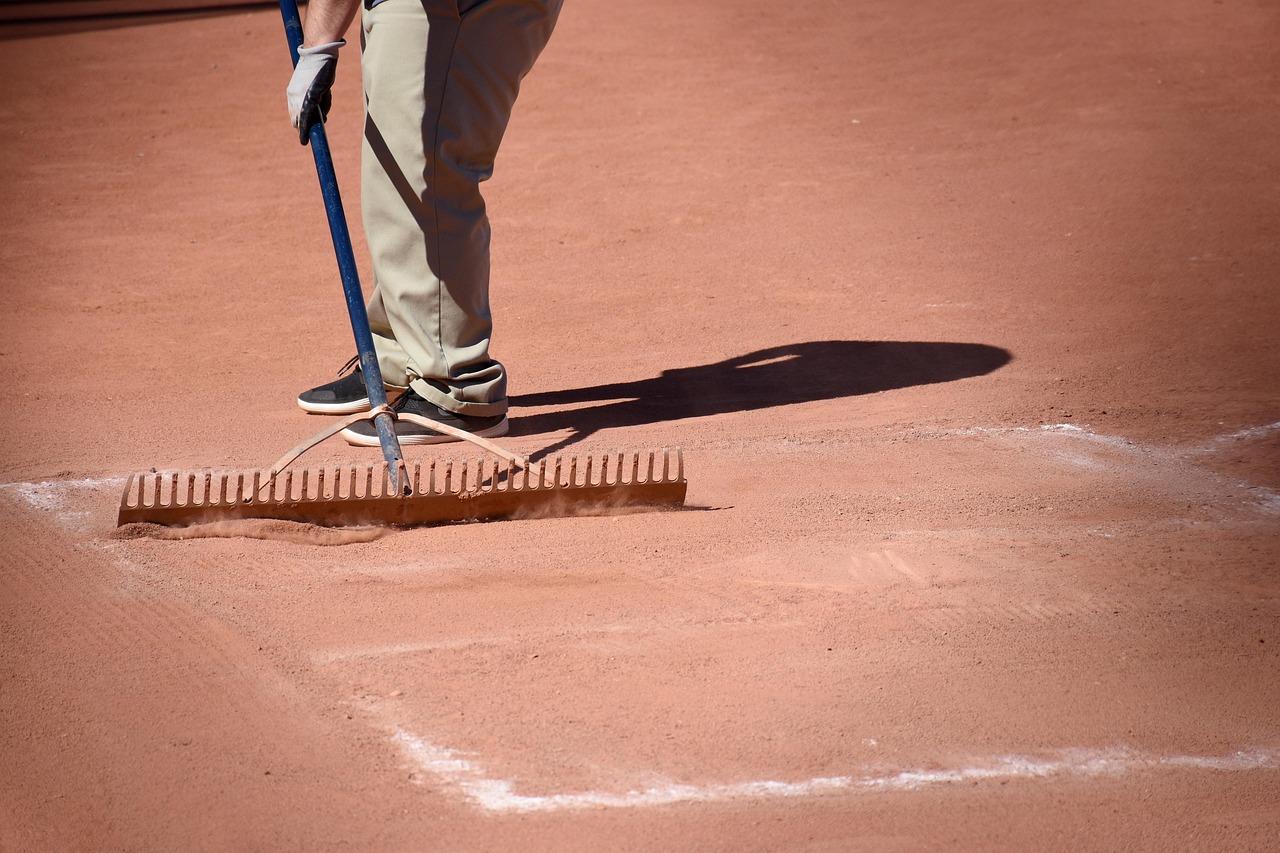
- Hand rake edges in the right direction. Rake parallel to the grass edge when possible, not into the turf, so infield material stays on the skin.
- Broom or rake loose material out of the grass. Regular edge cleanup is one of the simplest ways to prevent lips.
Dragging patterns matter as well. Avoid repeating the exact same path every time, because repeated turns and traffic can create ridges. Change starting points, vary directions when practical, and stop before the drag reaches the turf. Hand work may take longer, but it prevents many edge problems that are much harder to correct later.
Protect turf with mowing, irrigation, soil testing, and rest
The grass areas of a baseball field take repeated traffic from warmups, defensive positioning, coaches, spectators, and maintenance equipment. Turf maintenance should be based on plant health, not just visual color. University extension turf guidance commonly recommends routine soil testing so fertilizer and lime decisions match actual field conditions rather than guesswork.
Mowing should be frequent enough that no more than one-third of the grass blade is removed at one mowing. Removing too much leaf tissue weakens the plant and can reduce stress tolerance. Sharp mower blades are also important because torn leaf tips increase stress and leave the field looking dull even when fertility and irrigation are adequate.
Irrigation should reflect the soil, grass species, weather, and field use. For established turf, deep and less frequent watering generally encourages deeper rooting better than light daily watering, while newly seeded areas need lighter, more frequent moisture until establishment. Overwatering can soften the field, increase compaction risk, and contribute to shallow rooting. Underwatering can slow turf recovery and create bare areas where weeds and erosion can begin.
Rest is part of maintenance. Overscheduled fields do not get enough time for turf recovery, mound repair, lip prevention, aeration, overseeding, or topdressing. If one area is repeatedly worn, rotate drills, move warmup zones, and protect weak turf until it can recover.
Focus on high-wear areas before they become hazards
Some parts of a baseball field fail faster than others. A useful maintenance plan gives extra attention to these areas every day instead of treating the whole field the same.
| Area | Common problem | Maintenance action |
|---|---|---|
| Pitcher’s mound | Landing hole, loose slope material, worn push-off area | Fill with compatible clay, water lightly, tamp firmly, and reshape to the intended grade. |
| Batter’s boxes | Deep foot holes and loose material around the plate | Pull material back, add clay where needed, tamp repairs, and keep the surface level with home plate. |
| Base paths and sliding zones | Low spots, loose mix, and uneven sliding areas | Rake material back into play areas, level under and around bases, and avoid pushing mix into turf. |
| Grass-to-skin edges | Lip formation that blocks drainage and affects ball roll | Keep drags away from edges, hand rake parallel to turf, and broom loose material out of grass. |
| Outfield turf | Thin grass, compaction, poor recovery after traffic | Use soil testing, aeration, overseeding, irrigation checks, and traffic rotation when schedules allow. |
Transitions deserve close attention because they affect both safety and playability. A raised lip can trip a runner, cause an unpredictable ground ball, and prevent water from leaving the skin. The easiest lip to fix is the one prevented by daily edge discipline. See also: Buying Guides.
Plan maintenance by season, not just by game day
Game-day work keeps the field playable, but seasonal planning keeps it from declining over the year. The exact calendar depends on climate, grass type, budget, and schedule, but the maintenance categories are broadly similar.
| Season | Main priorities | Practical tasks |
|---|---|---|
| Preseason | Correct winter damage and prepare playing surfaces | Inspect drainage, repair mound and plate areas, edge the infield, test soil, service tools, and check irrigation coverage. |
| In season | Maintain safe, consistent daily play | Drag after use, repair high-wear areas, manage moisture, mow regularly, remove debris, and monitor lips. |
| Hot or dry periods | Reduce turf stress and dust | Adjust mowing height where appropriate, water based on field need, avoid unnecessary traffic, and watch for hard or dusty skin. |
| Late season or fall | Recover turf and repair compaction | Aerate when conditions allow, overseed thin areas, topdress where appropriate, and correct grade problems before winter. |
| Off-season | Plan repairs and reduce spring surprises | Review problem areas, schedule larger grading work, repair fencing or benches, and replace worn maintenance tools. |
This seasonal approach also helps crews set priorities when time is limited. If only a few tasks can be completed, address safety hazards, drainage failures, mound and plate damage, and severe turf wear before cosmetic improvements.
Keep the right tools available
Good baseball field care depends on simple tools being available when they are needed. A basic community-field kit often includes a field rake, landscape rake, lute or level board, hand broom, stiff push broom, tamp, nail drag, screen drag, hose, adjustable nozzle, puddle pump or sponge, base plugs, measuring tape, string line, and repair material that matches the existing infield mix.
Do not use random absorbents or fillers just because they are nearby. Penn State Extension guidance warns against using materials not intended for baseball fields, such as sawdust, wood shavings, or kitty litter, to dry wet fields. These materials can contaminate the playing surface, affect footing, and create longer-term maintenance problems.
Tool maintenance also matters. Bent rakes, worn brooms, uneven drags, and leaking hoses slow the crew down and can damage the surface. Store tools where coaches and volunteers can find them, label them clearly, and provide a short checklist so field preparation is not dependent on one experienced person.
Avoid common maintenance mistakes
- Dragging too close to grass. This moves infield mix into turf and accelerates lip formation.
- Dragging too fast. Speed throws material outward and creates uneven grade.
- Playing when the field is too wet. Wet play can create ruts, compact turf, and damage the infield skin.
- Pushing puddles into grass. This can enlarge low spots and block drainage at the edge.
- Skipping soil tests. Fertilizer without soil information can waste money and miss the real turf problem.
- Mowing too low or removing too much at once. Weak turf wears out faster and recovers more slowly.
- Ignoring small lips. Lips become harder to remove as more material builds into the grass edge.
- Overscheduling the field. Even well-built fields need time for recovery and repair.
Frequently asked questions
How often should a baseball infield be dragged?
For many fields, the infield skin should be raked or dragged after every use, provided the surface is not too wet. High-wear areas such as the mound, batter’s boxes, and sliding zones should be repaired before finish dragging.
Should a wet baseball field be played on if there is no standing water?
Not always. A field can be unsafe or easily damaged even after visible water is gone. If the skin smears, cleats deeply, or turf feels soft enough to rut, postponing play may prevent larger repairs.
How do you prevent lips on a baseball field?
Keep drags away from turf edges, hand rake parallel to the grass line, broom loose infield mix out of the grass, and avoid pushing puddles or loose material into the turf. Small daily habits are more effective than occasional major lip repair.
When should a field manager test the soil?
Annual or routine soil testing is a practical starting point for turf areas. Test results help guide fertilizer and lime decisions, which is more reliable than applying nutrients based only on color or habit.
What is the most important baseball field maintenance habit?
The most important habit is consistent inspection and repair after every use. Small repairs to holes, edges, moisture, and low spots help preserve safety, drainage, and playability throughout the season.