How to choose a wall mount butterfly gate latch for chain link and wood-post gates
a[data-rs-seo-link]{text-decoration:underline!important;color:#1a56db!important;cursor:pointer!important;}a[data-rs-seo-link]{text-decoration:underline!important;color:#1a56db!important;cursor:pointer!important;}
What a wall mount butterfly gate latch is for
A wall mount butterfly gate latch is a fork-style latch used when a swinging gate closes against a wall, building face, wood post, or another flat mounting surface instead of a round fence post. It is most often used on chain link gates with round tubular frames, especially where there is not enough space or structure to install a standard latch post.
The latch has to match the gate frame diameter, leave enough operating clearance, resist corrosion in the site environment, and suit the level of access control required. In most applications, it is utility gate hardware. It should not be treated as a complete safety system for pool barriers, child access control, or high-security entrances.
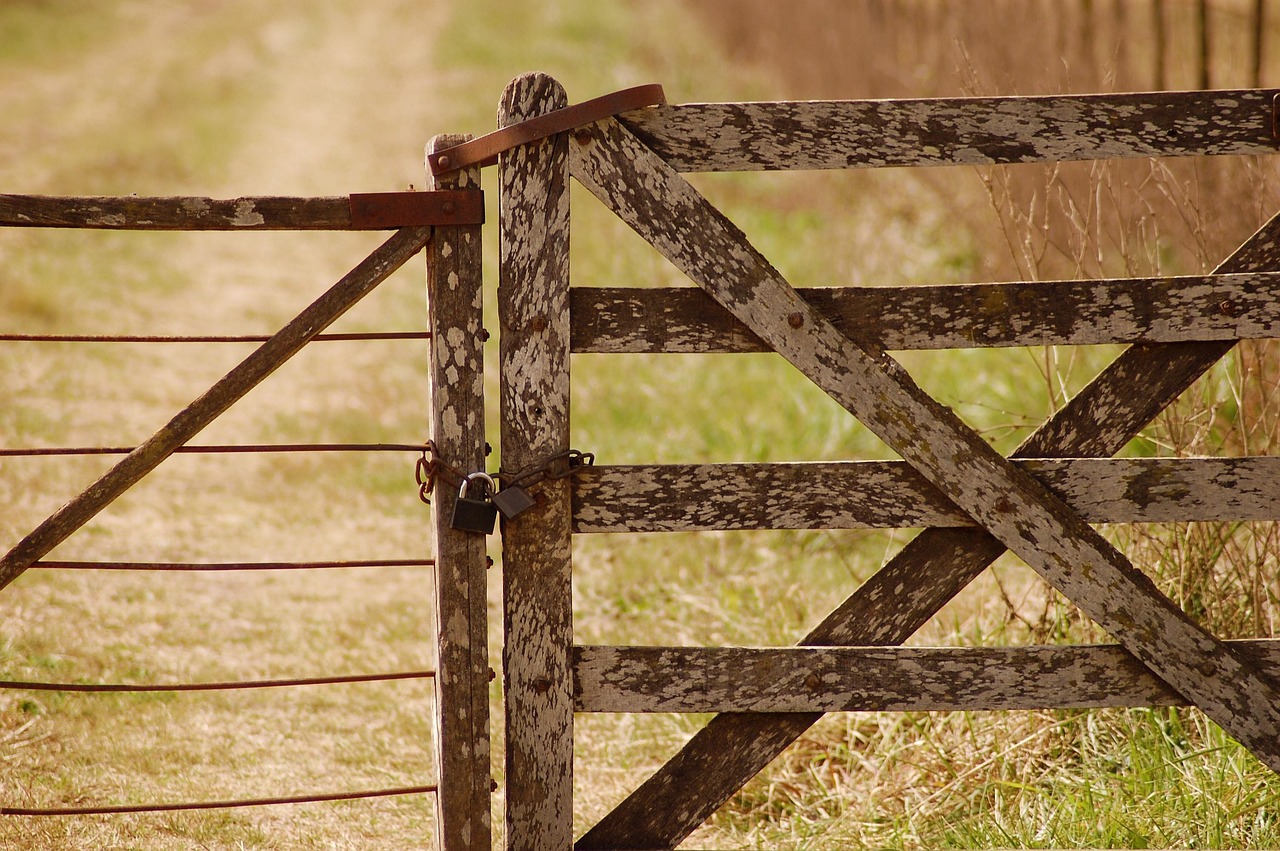
Most buyers look for this hardware because of a layout problem: the gate needs to latch to something flat. That can happen at a side yard, walkway, driveway edge, kennel run, service yard, garden enclosure, or utility fence where the gate closes against a wall or timber post. In those situations, a wall-mounted butterfly latch can be simpler than setting a new post, provided the gate is aligned and the mounting surface can hold the fasteners.
For more hardware selection topics, see the Buying Guides section.
How this latch differs from other gate latches
A butterfly latch uses two spring-like or wing-like fork plates. As the round gate frame enters the latch, the plates open and then close around the frame. Wall-mount versions use a flat back plate so the latch can be fastened to a wall, wood post, or similar vertical surface.
Many common models are designed for chain link gate frames in the 1-3/8 inch to 1-5/8 inch outside diameter range, but that range is not universal. Always check the product specification before buying.
The important difference is the mounting point. A post-mount butterfly latch wraps or clamps to a round terminal post. A wall-mount butterfly latch bolts through a flat plate into a flat structure. That changes the fasteners, backing material, gate-to-wall gap, and adjustment method.
| Latch type | Typical use | Main advantage | Common limitation |
|---|---|---|---|
| Wall mount butterfly latch | Chain link gate closing to a wall or wood post | Works where a latch post is not available | Needs correct frame diameter and clearance |
| Post mount butterfly latch | Chain link gate closing to a round post | Simple two-way latching on many fence layouts | Not useful when the receiving side is a wall |
| Gravity gate latch | Wood or vinyl pedestrian gates | Often easier to operate from one side or with a pull cord | May not fit round chain link frames without adapters |
| Slide bolt | Sheds, double gates, and low-security closures | Simple, cheap, and easy to understand | Usually manual and alignment-sensitive |
| Lockable gate latch set | Yard gates needing routine access control | Often better for daily use and keyed access | More parts and more installation planning |
Measurements to check before buying
The most important buying step is measuring the gate and the receiving surface. Do not rely on a product photo alone. A wall mount butterfly gate latch can look correct and still fail if the fork opening, back plate position, or screw pattern does not match the gate.
Gate frame diameter
Measure the outside diameter of the round gate frame where the latch will catch. Chain link pedestrian gates often use tubular frames, but the diameter can vary. Many wall-mount butterfly latches are sold for 1-3/8 inch or 1-5/8 inch frames. If the fork is too small, the gate will not enter the latch. If it is too large, the closed gate may rattle, lift out, or fail to hold consistently in wind.
Gate-to-wall clearance
Check the gap between the gate frame and the wall or post when the gate is fully closed. Some wall-mount butterfly fork latches need roughly 2 inches of operating space between the frame and the mounting surface, although the exact clearance depends on the model. Too little clearance can stop the wings from opening. Too much clearance can leave the frame barely engaged.
Mounting surface strength
The latch is only as reliable as the surface behind it. A solid wood post, structural wood framing, masonry with proper anchors, or a reinforced steel plate can provide a dependable base. Thin siding, weak trim, hollow fence boards, and crumbling masonry are poor mounting points unless they are reinforced. If the receiving surface flexes, the latch may go out of alignment even when the gate itself is in good condition.
Gate swing direction
Many butterfly latches allow a gate to latch from either direction, which can be useful for walkways and service areas. However, not every installation should allow two-way swing. Pool barriers, animal enclosures, and access-control gates may need a controlled swing direction, a stop, self-closing hinges, or a different latch type. Decide how the gate should move before selecting the hardware.
Materials and finish choices
Outdoor gate hardware is exposed to water, temperature changes, soil chemicals, fertilizers, road salt, and repeated impact. A low-cost latch may be suitable for a light-duty yard gate, but the finish should match the environment.
Galvanized steel is common for chain link hardware because the zinc coating helps slow corrosion. Powder-coated steel adds a decorative black or colored finish, but scratches can expose the metal beneath. Stainless steel is usually the better direction for coastal, wet, or corrosive locations, although it typically costs more.
Fasteners deserve the same attention as the latch body. Exterior wood and treated lumber applications should use corrosion-resistant fasteners. Industry guidance for treated wood commonly points toward hot-dip galvanized or stainless steel fasteners and connectors, with stainless steel often preferred in harsher exposures. Pairing a durable latch with weak or unsuitable screws is a poor trade-off because the fasteners may rust, loosen, or stain the surrounding material.
If the latch will be mounted to pressure-treated wood, check the fastener label as well as the latch label. If it will be mounted to masonry, use anchors rated for the substrate and expected load. If it will be mounted to steel, consider through-bolting where practical instead of relying on short sheet-metal screws.
Security, safety, and code limits
A wall mount butterfly gate latch can help keep a gate closed, and many versions include a padlock hole. That does not make it a high-security lock. The latch is usually exposed, and the strength of the system depends on the latch plate, screws, mounting surface, gate frame, hinges, and padlock. For equipment yards, rental properties, shared access points, or theft-prone locations, compare it with a purpose-built lockable latch or a welded receiver arrangement. See also: Fasteners.
Safety is a separate issue. For swimming pool and spa barriers, public safety guidance and model codes treat gate hardware differently from ordinary yard gates. The U.S. Consumer Product Safety Commission’s residential pool barrier guidance emphasizes self-closing and self-latching gates. The International Swimming Pool and Spa Code also includes requirements for gates to open away from the pool, self-close, self-latch, and place latch release mechanisms at specified heights or protected locations. Local adoption and amendments vary, so homeowners and contractors should verify the local rule before selecting hardware.
For those reasons, a basic wall mount butterfly gate latch should not be assumed to satisfy pool barrier rules. It may not be self-closing by itself, may be reachable by children, and may allow two-way swing unless paired with a stop and suitable hinges. If the gate protects a pool, spa, daycare area, animal containment area, or any setting where failure could create serious risk, choose a latch system designed for that use and confirm compliance with the local authority.
Installation checks that prevent common failures
Good installation is mostly a matter of alignment and support. Before drilling, close the gate slowly and mark where the round frame naturally meets the receiving surface. Do not use the latch position to compensate for a sagging gate. If the gate drags, twists, or drops at the latch side, correct the hinge and frame problem first.
- Confirm the latch height. Mount the latch where the gate frame enters the fork squarely, not at an angle.
- Check the closed position. The gate should sit naturally in the latch without pushing against it continuously.
- Use the correct fasteners. Lag screws may suit solid wood; masonry needs anchors; thin metal may require bolts or backing plates.
- Pre-drill where needed. Pre-drilling helps prevent wood splitting and improves fastener placement.
- Test both directions if applicable. If the latch is intended for two-way swing, make sure it catches consistently from both sides.
- Add a gate stop when needed. A stop can reduce impact loads and prevent the gate from slamming through the latch.
- Verify padlock clearance. If security matters, test the padlock with the gate closed before calling the job finished.
Wind and daily impact are common causes of latch failure. If the gate slams hard, the latch absorbs repeated shock. Self-closing hinges, rubber bumpers, a gate stop, or a closer can reduce that stress. On wide or heavy gates, the latch should not be used to pull the gate into alignment; the hinges and frame should already hold the gate in the correct position.
When to choose another latch instead
A wall mount butterfly latch is not always the best option. If the gate is made from wood, a traditional gravity latch or thumb latch may fit better and look cleaner. If the gate needs one-handed access from both sides, a lockable two-sided gate latch may be more convenient. If the opening is a double driveway gate, a drop rod and center stop may matter more than a small side latch. If the gate is part of a pool barrier, choose a compliant self-closing and self-latching system rather than adapting a basic utility latch.
Maintenance also matters. Butterfly latches are exposed mechanisms. Dirt, ice, paint buildup, bent wings, or a sagging gate can stop them from catching cleanly. In a rarely used utility area, that may be acceptable. For a daily-use pedestrian gate, a smoother latch with more adjustability may save time and frustration.
The right latch is not simply the strongest-looking part. It is the one that matches the frame diameter, receiving surface, environment, safety requirements, and access pattern. If any one of those conditions is wrong, another latch style will usually perform better.
Maintenance and troubleshooting
Inspect the latch at least seasonally, and more often in wet, coastal, or high-use locations. Look for rust, loose screws, wall movement, cracked wood, bent latch wings, and shiny wear marks that indicate misalignment. Tighten hardware only after checking why it loosened. If the gate has sagged, tightening the latch screws may hide the problem for a short time, but it will not solve it.
- Gate will not enter the latch: Check hinge sag, latch height, and clearance between the gate frame and wall.
- Gate rattles after latching: The fork may be too large for the frame, or the closed position may need a stop or bumper.
- Latch pulls loose: The mounting surface may be weak, the fasteners may be too short, or the gate may be slamming into the latch.
- Rust appears early: The finish may be damaged, the environment may require stainless hardware, or the screws may not be compatible with outdoor exposure.
- Padlock does not line up: The latch may be mounted too far from the gate frame, or the gate may not be seating fully.
Frequently asked questions
Can a wall mount butterfly gate latch be used on a wood gate?
It can be used only if the gate has a round frame member or a suitable round catch point for the fork to hold. Most wood gates work better with a gravity latch, thumb latch, ring latch, or slide bolt designed for flat boards.
Is a butterfly gate latch lockable?
Many models include a padlock hole, but the lock only improves basic access control. It does not turn the gate into a high-security barrier. The fasteners, mounting surface, hinge strength, and gate frame all affect real security.
What size latch do I need for a chain link gate?
Measure the outside diameter of the gate frame where the latch will catch. Many common wall-mount butterfly latches fit 1-3/8 inch to 1-5/8 inch frames, but product dimensions vary, so match the measurement to the specific latch listing.
Will this latch meet pool gate requirements?
Do not assume so. Pool and spa barriers often require self-closing, self-latching gates with specific latch placement rules. A basic wall mount butterfly latch is usually utility hardware, so verify local code and choose hardware designed for pool barrier use.
Why does my gate latch work in summer but not in winter?
Seasonal movement can change alignment. Wood posts can swell or shrink, soil can move, metal gates can shift on hinges, and ice can block the latch wings. Recheck the gate gap, hinge position, and fastener tightness before replacing the latch.