Pool maintenance tips for cleaner water and longer-lasting equipment
a[data-rs-seo-link]{text-decoration:underline!important;color:#1a56db!important;cursor:pointer!important;}a[data-rs-seo-link]{text-decoration:underline!important;color:#1a56db!important;cursor:pointer!important;}
Effective pool maintenance is a routine, not a one-time cleanup. The basics are straightforward: test and balance the water, remove debris before it breaks down, keep water moving through the filter, and inspect the hardware that supports safe circulation. These pool maintenance tips focus on the work that most affects water clarity, swimmer comfort, and equipment life.
For residential pools, chemical targets vary by pool type, sanitizer system, climate, water source, and product label. Public-health guidance such as the CDC’s aquatic venue recommendations, along with common pool-industry manuals, generally emphasizes the same priorities: adequate disinfectant, controlled pH, clean surfaces, and reliable filtration. Use the guidance below for practical planning, then follow your pool professional’s advice and the labels on chemicals used at your property.
Build a weekly pool maintenance routine
A pool is easier to manage when the core tasks happen on a predictable schedule. Waiting until water turns cloudy usually means more chemical correction, more brushing, and more filter cleaning than if small imbalances had been handled early.
A useful weekly routine includes:
- Skim the surface to remove leaves, insects, grass clippings, and windblown debris before they sink or clog baskets.
- Brush walls, steps, corners, tile lines, and ladders so algae and scale do not gain a foothold in low-circulation areas.
- Vacuum or run an automatic cleaner to remove dirt from the floor rather than letting it load the filter.
- Empty skimmer and pump baskets so water can move freely through the circulation system.
- Test sanitizer and pH before adding chemicals, because guessing often creates a second problem.
- Check water level and keep it around the middle of the skimmer opening unless your pool builder recommends otherwise.
- Inspect visible hardware including handrails, ladder anchors, drain covers, return fittings, valves, clamps, and pump connections.
Season, weather, landscaping, swimmer load, and pool cover use all affect the workload. A pool surrounded by trees may need daily skimming in spring and autumn. A pool used heavily on weekends may need testing before and after peak use. The best maintenance schedule is consistent, but still flexible enough to respond to actual site conditions.
For more home upkeep topics, see the Maintenance Tips section.
Test water before adjusting chemicals
Water testing is the foundation of pool maintenance because clear water is not always balanced water. Sanitizer, pH, total alkalinity, calcium hardness, and stabilizer levels affect each other. Adding products without a recent test can waste chemicals, irritate swimmers, or damage pool surfaces and equipment.
Many residential pool owners check free chlorine and pH several times per week during active swimming season, and more often after storms, heavy use, or high heat. Broader testing for total alkalinity, calcium hardness, and cyanuric acid can be done less often, but it should still be part of the routine. Test strips are convenient, while drop-based kits usually provide more precise readings when used correctly.
| Water factor | Why it matters | Practical maintenance note |
|---|---|---|
| Sanitizer | Helps control microorganisms and organic contamination | Maintain according to sanitizer type, product label, and local guidance |
| pH | Affects sanitizer performance, comfort, scale, and corrosion risk | Common operating guidance often keeps pool pH in a slightly alkaline range |
| Total alkalinity | Helps buffer pH movement | Low alkalinity can make pH unstable; high alkalinity can encourage scaling |
| Calcium hardness | Influences plaster protection, scale formation, and water balance | Targets differ for plaster, vinyl, fiberglass, and local water hardness |
| Cyanuric acid | Helps protect chlorine from sunlight in outdoor pools | Too much stabilizer can make chlorine management more difficult |
Record results in a notebook or phone app. Patterns are often more useful than a single reading. If pH rises every week, the cause may be aeration, high alkalinity, chemical habits, or source water. If sanitizer drops quickly, look at sunlight exposure, heavy use, organic debris, and circulation before adding more product.
Keep circulation and filtration working properly
Circulation moves water through skimmers, drains, pipes, the pump, the filter, heater, sanitizer equipment, and returns. When circulation is weak, chemicals distribute unevenly and debris settles in dead zones. Good water balance cannot fully compensate for poor water movement.
Start with simple observations. Return jets should create visible movement without aiming water so aggressively that air is pulled into the system. The pump basket should stay mostly free of debris. The pump lid should seal properly, with no continuous stream of air bubbles returning to the pool. Pressure on the filter gauge should be compared with the clean starting pressure for that specific filter, not with a generic number.
Filter care depends on filter type:
- Cartridge filters are usually removed and rinsed when flow drops or pressure rises. Damaged pleats, cracked end caps, and worn bands are signs replacement may be needed.
- Sand filters are backwashed when pressure rises above the clean baseline, then rinsed according to the valve instructions.
- Diatomaceous earth filters require careful backwashing, recharging with the correct amount of DE, and periodic grid inspection.
Manufacturer instructions matter because filter designs and valves vary. Over-cleaning a filter can reduce efficiency in some systems, while under-cleaning restricts flow and makes the pump work harder. If pressure changes suddenly, water stops moving, or the pump runs dry, shut the system down and investigate before continuing operation.
Clean surfaces before algae and scale settle in
Brushing is one of the most overlooked pool maintenance tips because it feels less technical than chemical testing. In practice, it is essential. Algae often starts in shaded corners, behind ladders, on steps, near light niches, around returns, and along tile lines where circulation is weaker.
Use a brush suitable for the pool surface. Stainless steel bristles may be appropriate for some plaster surfaces but can damage vinyl, fiberglass, painted finishes, and some specialty coatings. Nylon brushes are safer for many surfaces. If you are unsure, choose the gentler option and check the finish manufacturer’s guidance.
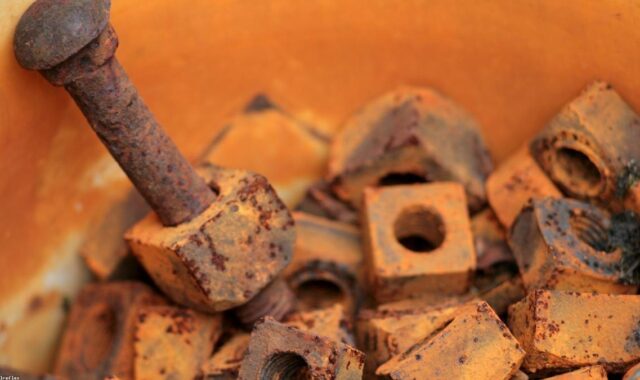
Tile lines collect body oils, sunscreen, pollen, dust, and mineral deposits. Cleaning them regularly reduces the chance of stubborn buildup. Avoid abrasive tools that scratch tile, metal trim, or fittings. For metal components such as ladders, rails, screws, anchors, and escutcheons, look for rust staining, looseness, sharp edges, and movement under load. Stainless steel is corrosion-resistant, not corrosion-proof, especially where water chemistry is poor or dissimilar metals touch.
Vacuuming should remove debris rather than stir it into suspension. Manual vacuuming gives more control in corners and stairs, while robotic and suction cleaners can reduce labor. Even with automatic cleaning, periodic manual brushing is still important because many cleaners do not scrub vertical surfaces or tight transitions thoroughly.
Protect pool hardware, fittings, and equipment
Pool maintenance is not only about water chemistry. Hardware condition affects safety, leaks, water movement, and repair cost. Many problems start with small signs: a loose ladder cup, a dripping union, a cracked lid O-ring, a noisy pump bearing, a brittle hose, a stiff valve handle, or a rust mark around a screw. See also: Buying Guides.
Inspect these areas during routine cleaning:
- Pump and motor area: listen for grinding, squealing, or changes in sound. Check for water under the pump and air in the pump basket.
- Valves and unions: look for drips, salt deposits, cracks, and hard-to-turn handles.
- Metal rails and ladders: confirm that anchors are tight and that surfaces are smooth and secure.
- Skimmer parts: check weirs, baskets, lids, and throat areas for cracks or missing pieces.
- Return fittings: make sure eyeball fittings are intact and aimed to support circulation.
- Cleaner hoses and cords: look for splitting, tangling, wear, or suction restriction.
Water chemistry plays a major role in equipment life. Low pH can make water more aggressive toward metal parts and surfaces. High pH, high alkalinity, and high calcium hardness can encourage scale on tile, heaters, salt cells, and fittings. Saltwater pools still require full water balance; the salt system only changes how chlorine is generated.
Use pool-rated replacement parts when repairing wet-area hardware. Indoor hardware, ordinary fasteners, and non-rated plastics may fail quickly in chlorinated, sunny, wet, or salty environments. When working near electrical equipment, lights, bonding wires, automation panels, or heaters, use a qualified professional rather than treating the repair as a simple DIY task.
Adjust maintenance after storms, heat, and heavy use
Some pool conditions require a faster response than the weekly checklist. Storms can add organic debris, dilute chemical levels, introduce dirt, and alter water level. Heat and direct sunlight can increase sanitizer demand. Large gatherings introduce sweat, sunscreen, cosmetics, and more physical debris.
After a storm, remove large debris first so it does not clog the skimmer or pump basket. Check the water level before running the pump. If the water is above the normal operating range, follow the pool builder’s or equipment manufacturer’s instructions for lowering it safely. Test water before adding chemicals, then brush and filter until clarity returns.
During very hot periods, test sanitizer more frequently and watch for early cloudiness. If the pool has a cover, remember that covers reduce debris and evaporation but can also trap heat and change how water behaves. Open and ventilate covered pools as appropriate, and avoid swimming if water is cloudy enough that the bottom is not clearly visible.
Heavy pool use is another reason to test sooner. A practical approach is to check water before guests arrive, keep debris out during the day, and test again afterward. This reduces the chance that contaminants sit in warm water overnight.
Common pool maintenance mistakes to avoid
Most pool problems are not caused by one missed task. They usually come from repeated small mistakes. Avoiding these habits will make routine care easier.
- Adding chemicals without testing: This can push pH, alkalinity, or sanitizer too far in the wrong direction.
- Pouring chemicals together: Pool chemicals should be handled separately and according to label directions. Mixing products can be dangerous.
- Ignoring the filter gauge: Flow problems often show up before water looks bad.
- Running the pump with blocked baskets: Restricted flow can strain the pump and reduce filtration.
- Using the wrong brush or tool: A tool that works on plaster may damage vinyl or fiberglass.
- Forgetting hidden areas: Steps, corners, ladders, and behind fittings are common places for algae to begin.
- Letting water level drift too low: If the skimmer pulls air, the pump can lose prime and overheat.
- Treating salt systems as maintenance-free: Salt cells, pH, stabilizer, and overall water balance still need attention.
Safety should be part of the maintenance routine. Store chemicals in their original containers, keep them dry, separate incompatible products, and follow label instructions for protective equipment and dosing. If a chemical reaction, strong odor, electrical issue, or major leak occurs, stop using the pool until the cause is understood and corrected.
Frequently asked questions
How often should I test my pool water?
During active swimming season, many residential pool owners test sanitizer and pH several times per week, and more often after heavy use, storms, or high heat. Broader balance factors such as alkalinity, hardness, and stabilizer can be checked on a less frequent schedule, but they should not be ignored.
Why is my pool cloudy even when chlorine is present?
Cloudiness can come from poor filtration, high pH, fine debris, algae growth, heavy swimmer load, unbalanced alkalinity or calcium, or inadequate circulation. Test the water, clean baskets, check filter pressure, brush surfaces, and confirm that the pump is moving water properly before adding more products.
Do saltwater pools need the same maintenance?
Yes. A saltwater pool still needs testing, brushing, filtration, equipment checks, and water balance. The salt chlorine generator produces sanitizer, but it does not automatically control pH, stabilizer, calcium hardness, debris, or scale inside the system.
When should I call a pool professional?
Call a qualified professional for electrical issues, heater problems, underground leaks, repeated pump priming failures, damaged drain covers, major surface cracks, persistent algae, or chemical readings that remain unstable after routine corrections. Professional help is also wise when replacing safety-related hardware.
A practical maintenance mindset
The most effective pool care is preventive. Skim before debris sinks, brush before algae spreads, test before dosing, clean filters before flow collapses, and inspect hardware before a small leak becomes a repair project. A clear checklist protects water quality, but it also protects pumps, filters, fittings, rails, and surfaces that are expensive to replace.
If you focus on regular testing, strong circulation, clean surfaces, and early equipment inspection, pool maintenance becomes less reactive and more predictable. That is the practical value of a good routine: cleaner water, safer swimming conditions, and fewer surprises during the months when the pool should be ready to use.