How to choose grinding tools for metalworking and repair
a[data-rs-seo-link]{text-decoration:underline!important;color:#1a56db!important;cursor:pointer!important;}a[data-rs-seo-link]{text-decoration:underline!important;color:#1a56db!important;cursor:pointer!important;}
What grinding tools are used for
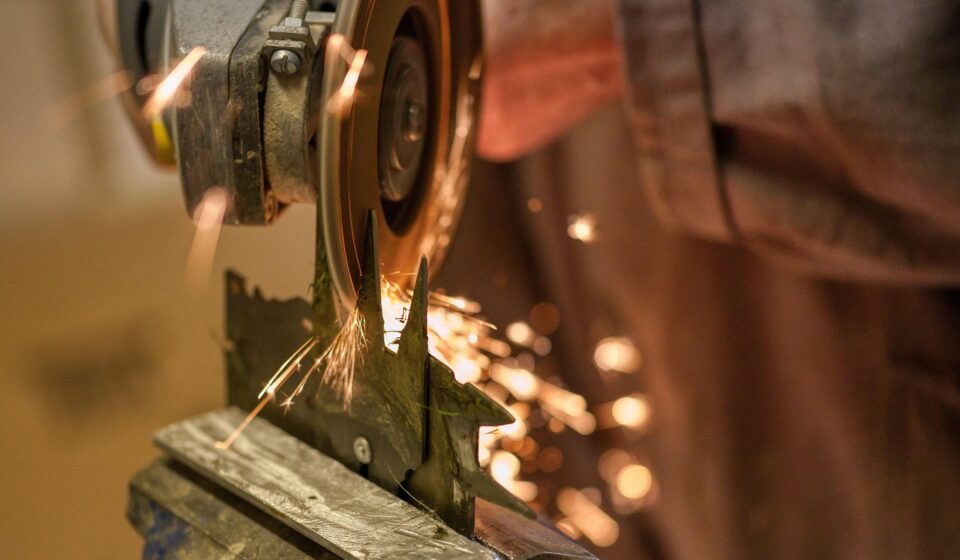
Grinding tools remove material by abrasion, not by a defined cutting edge. In metalworking, maintenance, construction, and repair, they are used to cut stock, remove welds, deburr sharp edges, shape hard surfaces, clean corrosion, sharpen tools, and prepare surfaces for finishing. The right choice depends on five practical factors: the work material, the amount of stock to remove, the required finish, the machine being used, and the safety limits printed on the abrasive product. A grinding wheel, flap disc, carbide burr, mounted point, or belt may all be correct in different situations. The wrong choice can slow production, overheat the workpiece, damage the tool, or create avoidable safety risks.
For readers comparing workshop equipment and consumables, this article sits within the broader Tools and Accessories category because grinding products are not standalone items. They work as part of a system that includes the machine, guard, arbor, workholding method, personal protective equipment, and operator technique.
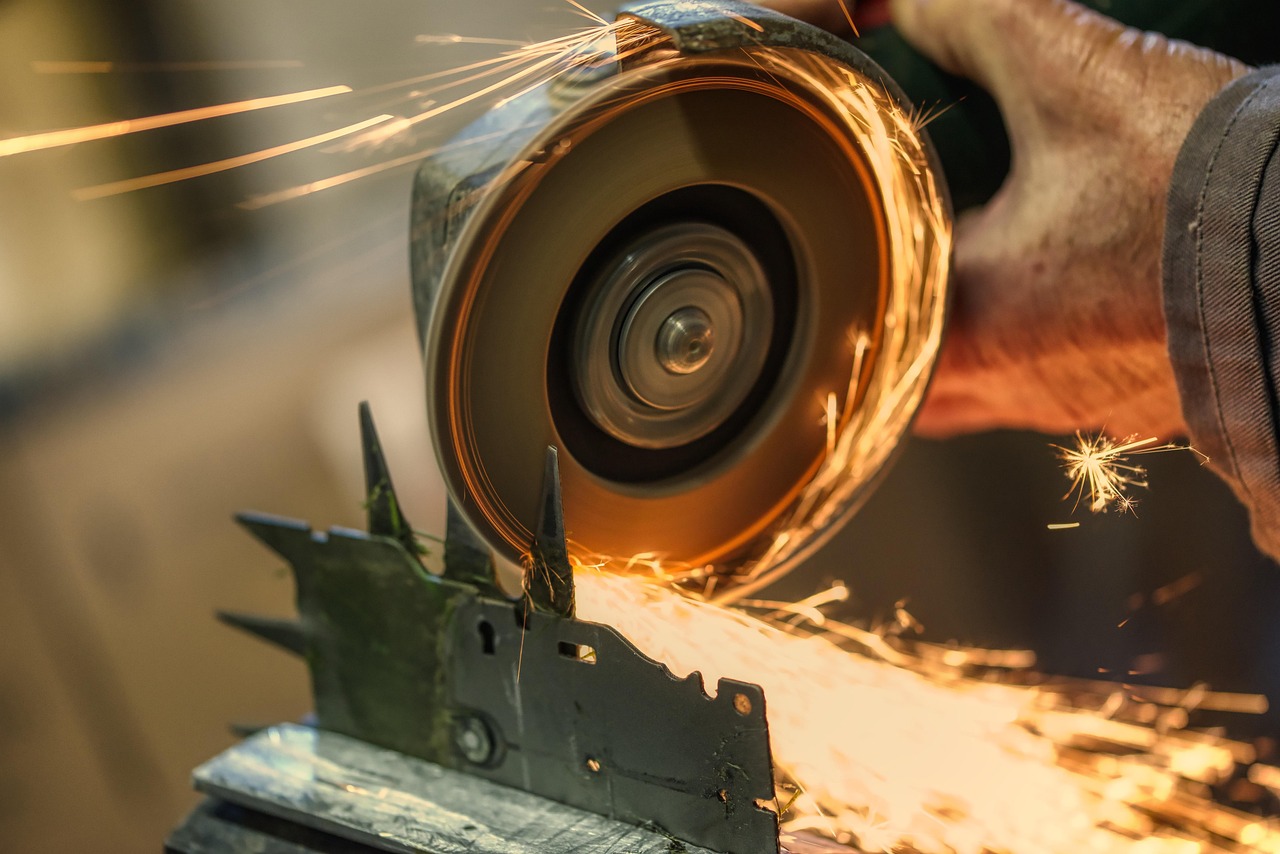
Main types of grinding tools
The term grinding tools covers several product families. They all rely on abrasive action, but they differ in construction and in the pressure, speed, and surface contact they are designed to handle.
Bonded abrasive wheels
Bonded wheels are made by holding abrasive grains together with a bonding material. Common examples include bench grinder wheels, surface grinding wheels, depressed-center grinding wheels, and cut-off wheels. They are used where the job requires controlled material removal, edge shaping, sharpening, or cutting. Because a bonded wheel rotates at high speed and can fail if misused, matching the wheel type to the operation is essential. A thin cut-off wheel, for example, is intended for cutting action and should not be used for side grinding unless the product is specifically marked for that use.
Coated abrasive products
Coated abrasives attach abrasive grains to a backing such as paper, cloth, fiber, or film. In grinding and fabrication work, common formats include sanding belts, fiber discs, flap discs, and abrasive rolls. They are often chosen for blending, smoothing, edge breaking, weld cleanup, and progressive finishing. A flap disc can remove material while leaving a more uniform finish than a hard grinding wheel, while a belt can produce consistent results on long edges or repeated parts.
Non-woven abrasive tools
Non-woven abrasive products use abrasive grains distributed through a flexible nylon web. They are usually selected for cleaning, satin finishing, light deburring, paint or oxide removal, and surface conditioning. They remove less base material than aggressive bonded wheels, which makes them useful when the goal is appearance, preparation, or controlled surface texture rather than heavy stock removal.
Carbide burrs, mounted points, diamond, and CBN tools
Rotary burrs and mounted points are common on die grinders and rotary tools for detail work, internal contours, slots, molds, castings, and weld access points. Diamond and cubic boron nitride, often called CBN, are usually grouped as superabrasives. Diamond is widely used on hard, brittle, or abrasive non-ferrous materials, while CBN is commonly associated with hardened steels and high-temperature alloy grinding. These tools are usually more specialized and more expensive, so the application should justify the cost.
How abrasive material affects performance
The abrasive grain is one of the most important selection points. It influences cutting speed, heat generation, wheel life, and the material range of the tool. Manufacturer markings should always be checked, but the following general patterns are useful for comparison.
| Abrasive material | Typical use | Selection note |
|---|---|---|
| Aluminum oxide | General steel, carbon steel, iron, and many shop tasks | A common starting point for general-purpose metal grinding |
| Zirconia alumina | Heavy grinding on steel and stainless steel | Often used where pressure and stock removal are higher |
| Ceramic alumina | Industrial grinding, stainless steel, hard alloys, and production work | Can maintain cutting action well under suitable pressure and speed |
| Silicon carbide | Cast iron, stone, masonry, glass, some non-ferrous metals, and hard brittle materials | Sharp and friable, but not always the best choice for tough steels |
| Diamond | Carbide, ceramics, stone, concrete, glass, and composites | Not a universal metal-grinding choice; application guidance matters |
| CBN | Hardened steels and some high-temperature alloys | Useful where heat resistance and wheel life justify the higher cost |
Bond type also matters. Vitrified bonds are common in precision grinding wheels because they can hold shape and expose fresh grain when dressed. Resinoid bonds are often used where shock resistance and high-speed operation are important. Rubber, shellac, metal, and electroplated bonds appear in more specific applications. For practical buying decisions, grain, bond, shape, and speed rating should be treated as a package rather than chosen one factor at a time.
Grit size, wheel hardness, and finish requirements
Grit size describes the size of the abrasive particles. Coarser grits remove material faster and leave deeper scratches. Finer grits remove less material per pass and can produce a smoother finish. In many shop applications, coarse grits such as 24 to 36 are used for heavy weld removal or fast shaping, medium grits such as 40 to 80 are used for blending and general cleanup, and finer grits are used for finishing steps. These ranges are guidelines, not universal rules, because pressure, speed, material, coolant, and abrasive construction all affect the result.
Wheel hardness is different from abrasive hardness. It describes how strongly the bond holds the abrasive grains. A wheel that is too hard for the job may glaze because dull grains stay locked in place. A wheel that is too soft may wear too quickly because grains release before they are fully used. Hard materials often require a wheel that releases dull grain at the right rate, while softer or gummy materials may need a different structure to reduce loading.
The required finish should be defined before the tool is selected. If the goal is to remove a weld bead quickly, a hard grinding wheel or aggressive ceramic flap disc may be appropriate. If the goal is to prepare stainless steel for a visible brushed finish, a sequence of flap discs and non-woven products may be more logical. If the goal is dimensional accuracy, a precision grinding wheel with dressing control is more relevant than a general repair disc.
Match the tool to the grinder, not just the material
A grinding tool must fit the machine mechanically and safely. Diameter, thickness, arbor size, wheel shape, maximum revolutions per minute, guard clearance, and intended grinding angle all matter. A disc that looks suitable for stainless steel can still be unsafe if its speed rating is below the grinder speed or if the arbor does not seat correctly.
For angle grinders, check the disc diameter, arbor size, maximum operating speed, and guard compatibility. Depressed-center wheels, flap discs, fiber discs, diamond blades, wire wheels, and cut-off wheels may fit the same basic class of tool, but they are not used in the same way. For bench grinders, wheel width, bore, blotters, flanges, side guards, tool rests, and dressing equipment become more important. For die grinders, shank diameter, burr geometry, overhang, and air or electric tool speed are critical.
Several widely used safety references, including OSHA’s abrasive wheel machinery rule in the United States, the HSE abrasive wheel guidance in the United Kingdom, and safety material from abrasive industry associations, emphasize the same core controls: inspect the wheel before mounting, confirm that machine speed does not exceed the abrasive’s marked maximum speed, use the correct guard, and avoid forcing a wheel into work it was not designed to do. These are not minor setup details; they are part of the tool selection process. See also: Buying Guides.
Safety and handling checks before use
Grinding creates sparks, hot particles, noise, dust, and the possibility of wheel breakage. Safe use begins before the tool touches the workpiece. Damaged wheels, cracked discs, wet or contaminated bonded abrasives, missing guards, incorrect flanges, and excessive side pressure are common avoidable hazards.
- Inspect abrasive products for chips, cracks, distortion, contamination, or water damage before use.
- For suitable vitrified wheels, use a ring test before mounting, following the applicable workplace rule or manufacturer guidance.
- Check that the wheel or disc maximum speed is equal to or higher than the machine’s spindle speed.
- Use the guard designed for the machine and wheel type; do not remove it to gain access unless a documented safe method applies.
- Use the correct flange, blotter, backing pad, or mounting hardware for the abrasive product.
- Keep the workpiece stable with proper clamping, fixturing, or tool rest adjustment.
- Wear suitable eye and face protection, hearing protection, respiratory protection when dust exposure requires it, and clothing that reduces spark and entanglement hazards.
- Let the tool reach operating speed before contact, and avoid twisting, jamming, dropping, or side-loading a wheel beyond its design.
Storage is often overlooked. Bonded wheels should be stored dry, clean, and protected from impact. Coated abrasives should be kept away from excessive humidity and deformation. Superabrasive tools should be protected from edge damage and contamination. If a product has been dropped or its history is uncertain, it should be treated cautiously rather than returned to service automatically.
A practical selection checklist
A structured checklist helps avoid buying a grinding tool based only on price or a broad product label. Before choosing, define the work as specifically as possible.
- Identify the work material. Carbon steel, stainless steel, aluminum, cast iron, carbide, stone, and concrete may require different abrasive choices.
- Define the operation. Cutting, weld removal, deburring, shaping, sharpening, cleaning, and finishing are different tasks.
- Set the finish requirement. Heavy removal and cosmetic finishing rarely use the same tool in one step.
- Confirm machine compatibility. Check diameter, arbor, thickness, guard, backing pad, shank size, and maximum RPM.
- Choose grain and construction. Match aluminum oxide, zirconia, ceramic, silicon carbide, diamond, or CBN to the material and pressure level.
- Select grit and grade. Start coarse for removal and move finer only when the process requires a smoother surface.
- Check safety markings. Read pictograms, speed ratings, direction marks, wet or dry limitations, and restrictions on side grinding.
- Compare total cost, not unit price. Consider cutting speed, wheel life, changeover time, rework, heat discoloration, and operator fatigue.
For occasional repair work, a smaller set of general-purpose grinding wheels, cut-off wheels, flap discs, non-woven pads, and burrs may cover many tasks. For production work, the better approach is to test a narrower range of application-specific tools under controlled conditions and record removal rate, surface finish, tool life, and reject rate. A higher-priced abrasive can be cheaper in use if it reduces cycle time and rework, but that should be proven in the actual application rather than assumed from marketing claims.
Common mistakes to avoid
One frequent mistake is using a cut-off wheel for grinding pressure. Cut-off wheels are usually thin and designed for radial cutting, not broad side loading. Another mistake is choosing a disc because it fits the arbor while ignoring the maximum speed rating. Fit does not equal suitability. A third mistake is moving directly from aggressive grinding to final finishing without intermediate steps, which can leave deep scratches that take longer to remove later.
Stainless steel adds another common issue: heat tint and contamination. Excessive pressure, a worn abrasive, or the wrong product can overheat the surface. Tools used on carbon steel can also transfer contamination to stainless steel. For visible or corrosion-sensitive stainless work, dedicated abrasives and controlled finishing sequences are often worth the extra planning.
Aluminum and other non-ferrous materials can load certain abrasives quickly. Loading reduces cutting action and increases heat. Products designed for non-ferrous metals, along with appropriate technique and cleaning methods, can reduce this problem. For stone, concrete, glass, and carbide, diamond tooling may be more efficient, but the bond and segment design should still match the machine and the cutting or grinding method.
Frequently asked questions
What is the difference between grinding and sanding?
Grinding usually refers to heavier material removal with bonded wheels, abrasive discs, burrs, or precision wheels. Sanding is more often associated with coated abrasives used for smoothing, blending, or finishing. In practice, the terms overlap, especially when flap discs and belts are used for both removal and finish control.
Can one grinding disc work on every metal?
No. A disc may be labeled for metal, but the best choice depends on whether the material is carbon steel, stainless steel, aluminum, cast iron, or a hard alloy. The abrasive grain, bond, backing, grit, and heat behavior all influence performance.
How do I know when a grinding wheel should be replaced?
Replace a wheel or disc if it is cracked, chipped, water damaged, contaminated, out of balance, worn below the manufacturer’s limit, or no longer cutting effectively. A wheel that has been dropped should be inspected carefully and should not be used if there is any doubt about its condition.
Are more expensive grinding tools always better?
Not always. Premium abrasives can deliver better life or faster removal in demanding work, but they may be unnecessary for light repair tasks. The better measure is cost per completed job, including time, finish quality, tool life, and safety.
Why does a grinding tool glaze or stop cutting?
Glazing happens when abrasive grains become dull but remain held in the bond instead of breaking away to expose fresh cutting points. It can result from an unsuitable wheel grade, light pressure, incorrect speed, or mismatch between wheel and material. Dressing, changing technique, or choosing a different specification may solve the problem.