Different metal finishes explained for hardware and fabricated parts
a[data-rs-seo-link]{text-decoration:underline!important;color:#1a56db!important;cursor:pointer!important;}a[data-rs-seo-link]{text-decoration:underline!important;color:#1a56db!important;cursor:pointer!important;}
How to think about different metal finishes
Different metal finishes are not only cosmetic choices. They are surface treatments applied after cutting, forming, casting, machining, welding, or assembly to change how a metal part looks, performs, and holds up in service. A finish may improve corrosion resistance, reduce wear, create a cleanable surface, add color, improve paint adhesion, adjust electrical behavior, or make a part look more consistent.
For hardware, brackets, enclosures, fasteners, machined components, and fabricated assemblies, the right finish depends on the base metal, service environment, tolerances, expected wear, appearance requirements, and regulatory constraints. A brushed stainless panel, a zinc-plated screw, an anodized aluminum extrusion, and a powder coated steel frame can all be good choices, but for different reasons. This guide explains the main finish families and the points to compare before writing a specification. For related articles, see our Surface Finishes section.
The main finish families
Most metal finishes fall into five practical groups. Some remove or texture the existing surface. Others convert, plate, or coat it. Knowing that difference helps prevent vague specifications and mismatched expectations.
- Mechanical finishes change texture by abrasion, polishing, blasting, tumbling, brushing, or buffing.
- Chemical and conversion finishes react with the surface to form or improve a thin protective layer, such as passivation, phosphate, black oxide, or conversion coatings.
- Electrochemical finishes use electrical current in a controlled bath, with anodizing being the common example for aluminum.
- Metallic coatings deposit another metal onto the part by electroplating, electroless plating, hot dipping, or related methods.
- Organic and hybrid coatings add a polymer or paint film, including powder coating, liquid paint, e-coat, and multi-layer duplex systems.
A useful finish specification should identify the substrate, pretreatment, finish type, color or texture, target thickness when relevant, inspection method, and any performance test. A drawing note that says only “black finish” or “corrosion resistant finish” leaves too much room for interpretation.
Mechanical finishes for texture, appearance, and edge condition
Mechanical finishing is often the first step in surface preparation. It can be the final finish when appearance and touch are the main requirements, or it can prepare the part for passivation, anodizing, plating, or coating.
Brushing, graining, and polishing
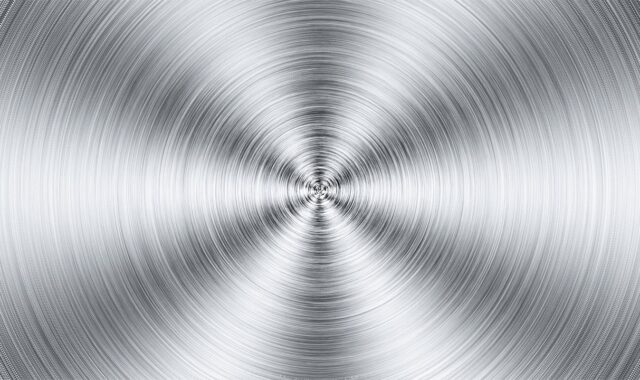
Brushing and graining create a directional surface pattern. They are common on stainless steel sheets, appliance trim, architectural hardware, and decorative panels because they can hide small handling marks better than mirror-polished surfaces. Polishing uses progressively finer abrasives to reduce visible scratches and increase reflectivity.
These finishes improve appearance and can affect cleanability, but they do not automatically provide corrosion protection. On stainless steel, heavy abrasion can disturb the natural passive film and may embed iron contamination if the wrong tools are used. For critical stainless parts, cleaning and passivation after mechanical work are often more important than the level of shine.
Blasting, tumbling, and deburring
Abrasive blasting creates a matte surface and can remove scale, light rust, paint, or previous coatings. Tumbling and vibratory finishing are widely used for small parts to break sharp edges, remove burrs, and make surfaces more uniform. These methods are common for fasteners, stamped parts, small machined components, and castings.
The limitation is process control. Blasting media, pressure, angle, and exposure time can change roughness and may affect thin sections or sharp features. Tumbling can round edges and alter small dimensions. If a part has sealing surfaces, threads, bearing fits, cosmetic faces, or critical edges, those areas may need masking or a tighter process instruction.
Chemical and conversion finishes
Chemical and conversion finishes work by reacting with the metal surface rather than adding a thick separate layer. They are often thin, dimensionally modest, and useful where paint adhesion, corrosion resistance, or appearance must be improved without major build-up.
Passivation for stainless steel
Stainless steel resists corrosion because chromium in the alloy supports a thin passive oxide film. Passivation is a chemical treatment intended to remove free iron and surface contamination so that this protective condition can form or recover. Industry specifications such as ASTM A967 describe chemical passivation treatments for stainless steel parts, including nitric acid and citric acid approaches.
Passivation is valuable after machining, grinding, welding-related cleanup, handling, or any process that may leave iron contamination on stainless parts. It normally does not add a visible coating and usually has little effect on dimensions. However, it is not a cure for choosing the wrong stainless grade. A passivated stainless part can still stain, pit, or fail if exposed to chlorides, crevices, heat tint, poor drainage, or an environment beyond the alloy’s capability.
Black oxide and phosphate
Black oxide is a conversion finish used mainly on ferrous metals. It produces a thin dark appearance and is commonly paired with oil, wax, or another sealant. It is useful when low dimensional change and a dark look are needed, but its corrosion protection depends heavily on the post-treatment and service conditions.
Phosphate coatings are common on steel where paint adhesion, break-in lubrication, or mild corrosion resistance is required. Zinc phosphate and manganese phosphate are used in different applications, from painted components to wear-related surfaces. Like black oxide, phosphate is usually part of a system rather than a complete corrosion solution on its own.
Conversion coatings for aluminum
Aluminum conversion coatings can improve corrosion resistance and paint adhesion while adding less thickness than many other coatings. They are often used before painting or powder coating. Traditional chromate conversion coatings have a strong performance history, but chromium chemistry raises environmental and worker-safety concerns. Many projects now specify non-chrome conversion coatings where the application, customer requirement, and applicable standards allow them.
Electrochemical and metallic finishes
Electrochemical and metallic finishes are selected when a part needs a functional surface that differs from the base metal. They can provide sacrificial protection, wear resistance, color, conductivity, solderability, or a controlled oxide layer.
Anodizing for aluminum
Anodizing is an electrochemical process that grows a controlled aluminum oxide layer from the surface of the aluminum itself. It is widely used on extrusions, machined aluminum parts, architectural components, consumer hardware, and transportation parts. The finish can be clear or dyed, and it can range from decorative anodizing to hard, wear-resistant anodizing.
Architectural anodizing specifications often distinguish between coating classes and thickness ranges. Hard anodizing is generally selected when abrasion resistance is more important than decorative color consistency. Anodizing can improve wear and corrosion resistance, but it also affects dimensions because part of the oxide grows inward and part grows outward. Threads, tight bores, sliding fits, and masked electrical contact areas should be reviewed before the finish is released.
Electroplating and electroless plating
Electroplating deposits a metal layer onto a conductive part using an electrical current. Common plated finishes include zinc, nickel, chrome, copper, tin, and multi-layer systems. Electroless nickel uses a chemical reduction process rather than external current, which can help achieve more uniform coverage on complex shapes when the process is properly controlled. See also: Buying Guides.
Zinc plating is often selected for small steel hardware because zinc provides sacrificial corrosion protection. Nickel can add wear resistance, brightness, and corrosion performance when used in suitable systems. Chrome plating may be decorative or functional, depending on thickness and process. Tin plating is common where solderability or electrical behavior matters.
Plating is effective, but it is not simple. Thickness distribution can vary across edges, recesses, and internal features. High-strength steels may require procedures to manage hydrogen embrittlement risk. Certain chromium processes also carry significant health, safety, and wastewater obligations under workplace and environmental rules. These issues should be addressed before the finish is treated as a low-cost afterthought.
Hot-dip galvanizing
Hot-dip galvanizing coats steel by immersing it in molten zinc, creating zinc and zinc-iron alloy layers. It is widely used for outdoor steel because the zinc acts both as a barrier and as sacrificial protection when small areas are damaged. Structural brackets, railings, poles, grating, outdoor frames, and infrastructure hardware are common examples.
The trade-off is appearance and dimensional control. Hot-dip galvanizing is typically thicker and less visually refined than zinc electroplating. It may leave spangle, runs, drainage marks, or rough areas, and threaded parts often need allowances or post-processing. It is best specified where outdoor durability matters more than fine cosmetic control.
Organic and hybrid coatings
Organic coatings add a paint or polymer layer over the metal. Their performance depends strongly on surface preparation, pretreatment, film thickness, curing, edge coverage, and the exposure environment.
Powder coating
Powder coating typically uses electrostatic spray deposition followed by heat curing. It is popular for steel and aluminum because it can create a durable, uniform-looking film in many colors and textures. It is widely used on enclosures, frames, brackets, railings, equipment panels, furniture, and appliance parts.
Powder coating can provide good impact and abrasion resistance, but it is not automatically corrosion-proof. If edges are sharp, pretreatment is poor, or the coating is damaged in service, corrosion can creep under the film. For exterior steel, powder coating often performs better when combined with zinc-rich primers, galvanizing, or other pretreatments designed for the exposure.
Liquid paint, e-coat, and duplex systems
Liquid paint remains useful for large assemblies, complex color requirements, repairability, and substrates that cannot tolerate powder cure temperatures. E-coat is valued for its ability to coat complex shapes and recesses consistently, which is why it is widely associated with automotive and industrial coating systems.
Duplex systems combine metallic protection with an organic coating, such as galvanized steel plus paint or powder. The metallic layer helps protect exposed areas, while the topcoat provides color, barrier protection, and UV resistance. Duplex systems require careful surface preparation because paint or powder does not adhere well to every galvanized surface condition without the correct pretreatment.
Comparison table for common metal finishes
| Finish type | Common substrates | Main strengths | Key limitations | Typical use cases |
|---|---|---|---|---|
| Brushed or polished | Stainless steel, aluminum, brass | Controlled appearance, improved touch, visible grain or shine | Limited corrosion improvement by itself | Panels, trim, decorative hardware, appliance parts |
| Blasted or tumbled | Steel, stainless steel, aluminum, zinc die castings | Matte texture, burr removal, edge softening | Can change roughness, embed media, or round features | Machined parts, castings, small hardware, parts before coating |
| Passivation | Stainless steel | Removes free iron contamination with little dimensional change | Does not compensate for wrong alloy or severe exposure | Machined stainless parts, medical-style hardware, food-contact-style components where appropriate standards apply |
| Black oxide | Steel and stainless variants | Dark appearance, low build-up | Needs oil, wax, or sealer for meaningful corrosion resistance | Tools, fasteners, firearm-style components, low-glare hardware |
| Anodizing | Aluminum | Wear resistance, corrosion resistance, decorative color options | Color variation, dimensional impact, alloy sensitivity | Extrusions, machined aluminum parts, consumer and architectural hardware |
| Zinc plating | Steel | Sacrificial corrosion protection for small parts | Thickness distribution and hydrogen embrittlement concerns for some steels | Screws, brackets, clips, stamped hardware |
| Electroless nickel | Steel, stainless steel, aluminum with proper pretreatment | Uniform coverage on complex geometry, wear and corrosion performance | Cost, chemistry control, possible post-bake requirements | Precision components, shafts, tooling, fluid-handling parts |
| Hot-dip galvanizing | Steel | Robust outdoor zinc protection | Thicker, rougher, less cosmetic, affects threads and tight fits | Outdoor frames, railings, brackets, grating, structural hardware |
| Powder coating | Steel, aluminum | Color choice, durable polymer film, good visual consistency | Requires pretreatment; damaged coating can allow underfilm corrosion | Enclosures, frames, furniture, equipment housings, railings |
How to choose the right finish
The most reliable way to choose among different metal finishes is to start with the service requirement, not the catalog name. A finish that works well indoors may fail quickly outdoors. A finish that looks good on a flat sample may be difficult to control on threaded, recessed, welded, or assembled parts.
- Define the environment. Indoor dry use, outdoor weathering, marine exposure, chemical contact, food-area cleaning, road salt, and high humidity all require different assumptions.
- Confirm the substrate. Steel, stainless steel, aluminum, brass, copper, and zinc die castings do not accept the same treatments in the same way.
- Review geometry and tolerances. Plating, anodizing, galvanizing, and coating can affect holes, threads, sliding fits, stamped edges, and mating faces.
- Separate appearance from performance. A finish can be black, bright, matte, or clear without necessarily being suitable for corrosion, wear, or UV exposure.
- Specify pretreatment. Cleaning, descaling, degreasing, conversion coating, abrasive preparation, and masking often determine whether the finish succeeds.
- Choose verification methods carefully. Salt spray testing such as ASTM B117 defines a controlled fog environment, but hours in salt spray should not be treated as a direct prediction of real service life without application-specific context.
- Check compliance early. Chromium processes, wastewater, worker exposure, and customer restricted-substance requirements can influence which finishes are practical.
If the part is functional or safety-related, the finish should be specified with the same care as the material and dimensions. A clear drawing note may include the base material, finish standard, coating thickness range, color, gloss, masking areas, post-treatment, corrosion test, adhesion test, and inspection acceptance criteria.
Frequently asked questions
What are the most common different metal finishes?
The most common groups are mechanical finishes, passivation and conversion coatings, anodizing, electroplating, galvanizing, powder coating, and liquid paint. The right choice depends on the base metal and the performance goal.
Which metal finish gives the best corrosion resistance?
There is no universal best finish. Hot-dip galvanizing is often strong for outdoor steel, anodizing is widely used for aluminum, passivation is important for stainless steel, and powder coating can perform well when paired with proper pretreatment. The exposure environment matters more than the finish name alone.
Is powder coating better than plating?
Powder coating and plating solve different problems. Powder coating provides color, film build, and barrier protection. Plating can provide sacrificial protection, conductivity, solderability, wear resistance, or a metallic appearance. Some parts use both a metallic layer and an organic topcoat.
Does passivation change the look of stainless steel?
Passivation usually causes little visible change when the stainless surface is already clean and properly prepared. Its purpose is not decoration; it is to remove surface contamination and support the stainless steel’s passive condition.
Can a finish affect part dimensions?
Yes. Plating, anodizing, galvanizing, powder coating, and paint can all change dimensions. Even thin finishes may matter on threads, press fits, bearing surfaces, sealing faces, or precision holes. Critical areas should be masked, compensated, or inspected after finishing.